Find paper clip, heart, slice of pie, ice-cream cone and toothbrush.
Safari Seek-and-Find: A Hidden Object Quest Among Majestic Wildlife
Journey Into the Wild: A Jungle Illustration Full of Secrets
Welcome to the heart of the wilderness—a place where lions rest beneath the sun, zebras nibble on tall grass, and crocodiles lie motionless in shallow pools. But don’t be fooled by the serene faces of these creatures. This isn’t simply an artful drawing of African wildlife—it’s a cleverly crafted hidden object challenge designed to test your observation skills. Tucked into this hand-sketched scene are secret items and disguised shapes waiting for sharp-eyed explorers to uncover them.
If you came only to admire the rhino or greet the giraffe towering in the distance, you might be surprised. This detailed artwork doubles as an interactive brain game—one that invites you to see what others might overlook.
Why Hidden Object Games Offer the Ultimate Brain Safari
There’s a reason hidden object puzzles never go out of style. They’re engaging, nostalgic, and cunningly clever. These visual challenges don’t just entertain—they strengthen your cognitive skills in ways you might not realize.
Tuning Your Senses, Explorer Style
Just as lions depend on sharp vision for hunting and giraffes scan the horizon from above, you’ll need heightened awareness to solve this puzzle. Here’s what your brain is secretly doing while you search:
Focused attention: You’re training your eyes to pick up tiny inconsistencies.
Pattern detection: Stripes, patches, curves, and shadows begin to reveal what doesn’t belong.
Short-term memory: “Did I already look there?” Your mental tracking systems are hard at work.
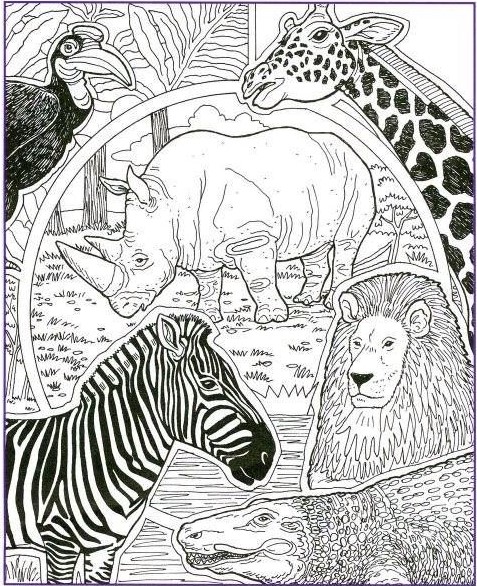
Meet the Wildlife Stars of This Ink-Drawn Adventure
Before we dive into the secrets hidden within the scene, let’s appreciate the animals that bring this safari to life. Each creature adds charm, but each also helps conceal the objects you’re looking for.
The Sturdy Rhino at the Center
Front and center stands a formidable rhinoceros, its textured skin made of fine, delicate line work. But look carefully. Are those wrinkles just wrinkles—or could something be disguised within the folds? A tiny creature? A letter? A familiar shape?
The Graceful Giraffe
Stretching from the background, the giraffe’s elegant neck rises above the others. Its patchwork pattern might serve more than decorative purposes—some shapes could mimic tools, animals, or symbols hidden among the spots.
The Zebra and Its Optical Trickery
Zebras are nature’s masters of illusion. Their dramatic striping can hide almost anything. A random line could be a clue. A concealed object could be nestled where the colors meet—maybe a stray feather or a disguised icon hiding in plain sight.
The Lion: Calm but Deceptive
The lion sits serenely, but its mane is a playground for visual deception. Every curl and tuft can morph into something unexpected. Some might resemble leaves, others claws, and others shapes you wouldn’t anticipate at all.
The Crocodile Near the Water’s Edge
Motionless and camouflaged, the crocodile blends seamlessly into its surroundings. Its textured body mirrors rocks, roots, and shadows, making it an ideal place for hiding tiny objects or subtle outlines.
The Bird Overhead
Perched in the top-left corner, the tropical bird isn’t just part of the scenery. Its feathers and beak may be masking symbols or shapes hidden in the lines of its wings or around its face.
Where the Hidden Objects Are Most Likely Concealed
Now that we’ve introduced the cast, it’s time to develop your strategy. Where should your eyes linger?
1. Inside Patterned Areas
Zebra stripes and giraffe patches are prime real estate for hidden items. Don’t skim—study them. Look for unusual overlaps, repeated shapes, or odd distortions.
2. Between Section Dividers
The artwork is broken into visual segments, almost like panels. Artists often hide objects along the borders—an extra vine, an out-of-place insect, or a subtly drawn tool.
3. In the Background Scenery
The animals aren’t the only features worth studying. The clouds, rocks, grass, and distant trees may contain outlines that mimic the environment. That “stone” might actually be a teeny turtle; that fluffy cloud may have an animal cleverly integrated into its edges.
4. Along the Frame and Corners
Most people focus on the center first, but the borders often hold the sneakiest secrets. A disguised symbol, a tiny fish, or even a hidden letter may be waiting where attention rarely goes.
How to Become a Hidden-Safari Pro
Want to solve this puzzle like a seasoned adventurer? Try these techniques:
Shift your focus: Slightly blur your vision or view the picture from a different angle to reveal patterns.
Use highlights and shadows: Many hidden shapes rely on lighting tricks.
Take short breaks: A fresh brain spots things instantly.
Invite a friend: A second set of eyes often notices what you don’t.
Why These Puzzles Appeal to Every Age Group
Children, adults, and older puzzle lovers all find joy in hidden object challenges. They’re relaxing, stimulating, and wonderfully rewarding.
For Kids:
Enhances vocabulary (“Mom, what is this object called?”)
Strengthens concentration skills
Improves hand-eye coordination—especially if coloring is involved
For Adults:
Boosts cognitive clarity
Helps reduce stress through calm, focused searching
Rekindles creativity and observational curiosity
.
.
.
.
Answer:
Final Thoughts: See the Unseen
This safari-themed puzzle is more than an illustration of wild animals—it’s a layered visual maze filled with secret surprises. From the rhino’s wrinkles to the zebra’s hypnotic stripes, every element invites you to pause, look closely, and rediscover the beauty of paying attention.
So next time you come across a drawing like this, don’t just move past it. Dive in. Explore every corner. Because in the world of hidden object adventures, the true thrill lies in the details you almost missed.
Happy exploring!