Harold Whitaker did not raise his voice when he walked into the garage and saw the empty space.
That was what made his son Michael feel worse.
For thirty-eight years, the old blue Chevy had sat on the left side of that garage. Harold washed it by hand every spring, changed the oil himself, and kept the keys on a small brass hook beside the workbench. The car was not beautiful anymore. The paint had faded. The seats had cracks. The radio only worked when it felt like it. To Michael, it was just another thing his father refused to let go.
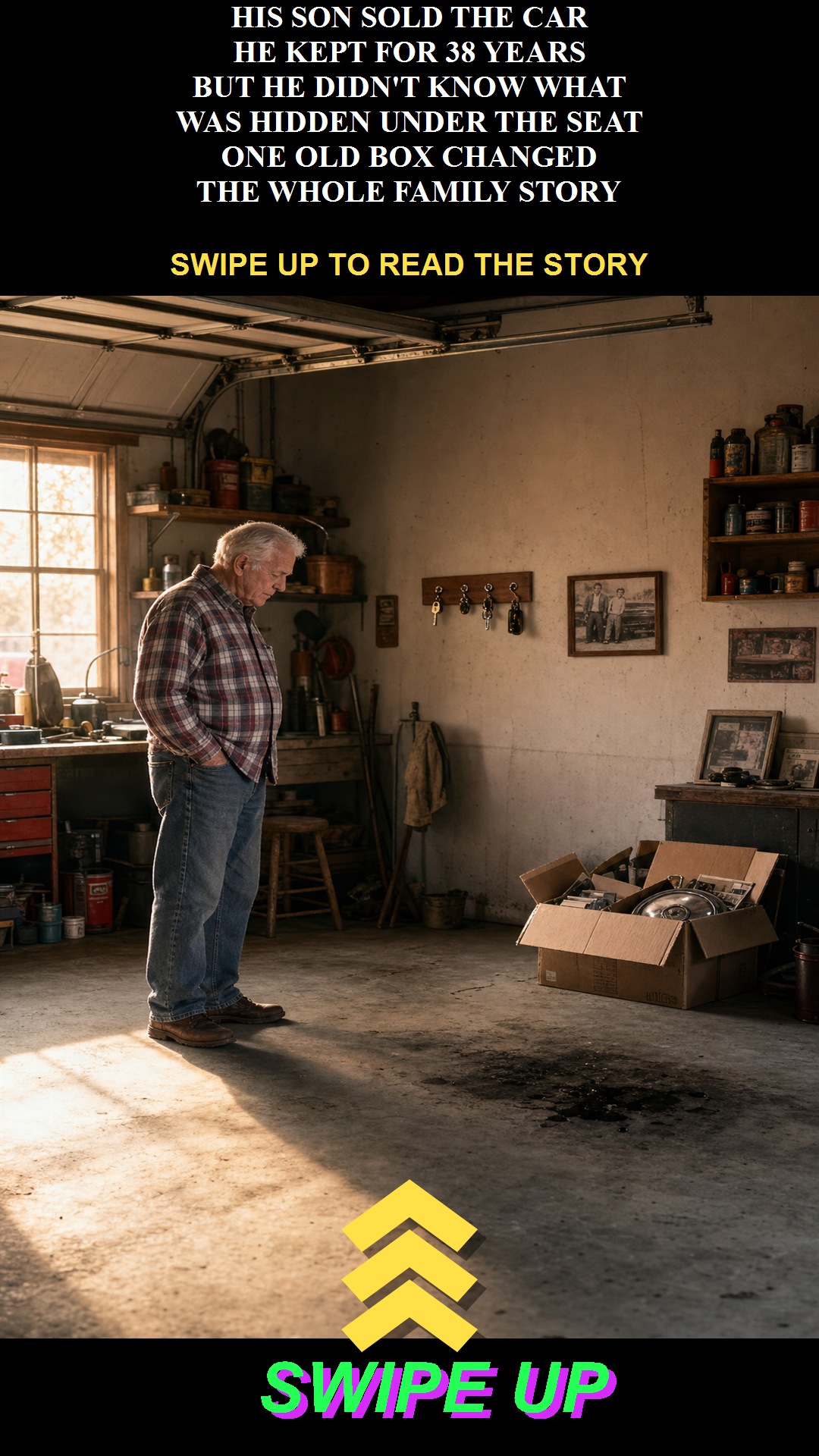
Michael had been trying to clean up the house since his mother died. Boxes filled the closets. Old tools lined the walls. Newspapers, Christmas ornaments, coffee cans full of bolts, and half-broken lamps seemed to be everywhere. His father was seventy-two now, and Michael thought he was helping by making decisions Harold could not make for himself.
So when a collector offered cash for the Chevy, Michael said yes.
He told himself the money would help. He told himself his father did not drive it anymore. He told himself no one needed a car that mostly gathered dust.
But when Harold came home from the grocery store and stopped in the garage doorway, Michael knew he had made a mistake.
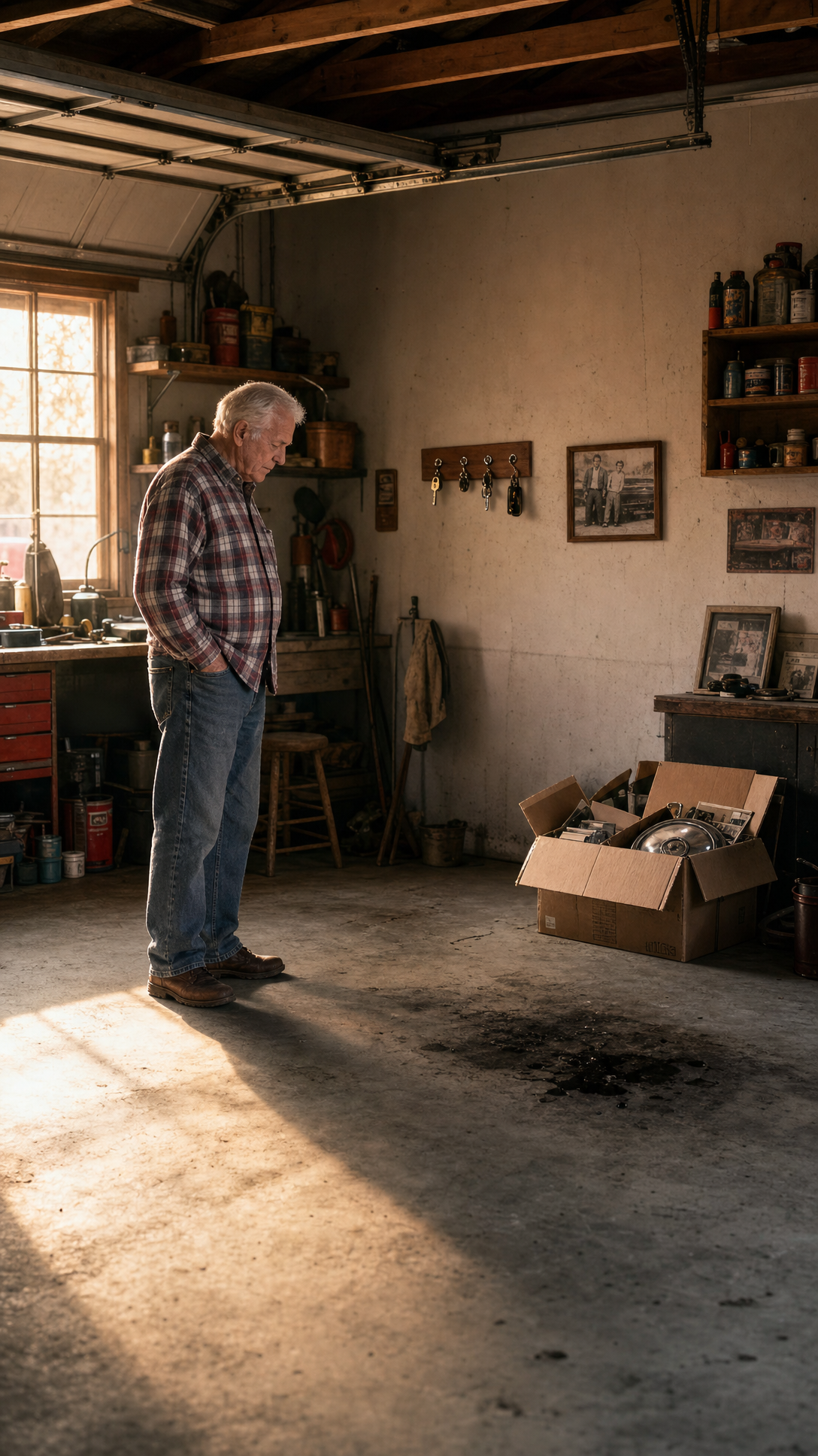
Harold looked at the oil stain on the concrete. Then he looked at the empty hook where the keys had always hung.
“Where is she?” Harold asked.
Michael tried to explain. He talked about space, money, safety, and how the car had been sitting there for years.
Harold listened without interrupting. Then he turned toward the workbench, picked up an old rag, folded it once, and set it down again.
“You sold your mother’s car,” he said.
Michael frowned. “Dad, Mom never drove that car.”
Harold gave a small, tired smile. “No. But she saved me in it.”
That night, Michael could not sleep. He kept thinking about the way his father’s shoulders had dropped. Harold had always been a quiet man, the kind who fixed things instead of talking about them. He had worked at the same machine shop for forty-one years, packed the same lunch, and came home with grease under his fingernails. Michael had mistaken that silence for stubbornness.
The next morning, he called the collector.
The man had already hauled the Chevy to a storage barn two counties away, but he had not started restoring it. Michael drove there before noon, paid more than he had received for the car, and asked if he could look inside before bringing it home.
“Your father leave something in it?” the collector asked.
“I don’t know,” Michael said. “Maybe.”
The Chevy smelled like sun-baked vinyl, old paper, and machine oil. Michael opened the glove box first. Insurance cards. A cracked flashlight. A folded map from 1989. Nothing important.
Then he remembered his father’s words from the fast-story image that had pulled him back into the whole thing:
He did not know what was hidden under the seat.
Michael reached under the driver’s seat and felt metal, dust, and then the corner of something wrapped in cloth. He pulled it out carefully. It was a flat wooden box, no larger than a cigar box, tied shut with a brown shoelace.
Inside were photographs.
The first showed Harold at twenty-eight, standing beside the Chevy with his arm around Michael’s mother, Elaine. She was laughing, her hair blown across her face. The second showed the same car outside a hospital. On the back, in Elaine’s handwriting, were the words: The night we brought Michael home.
Michael sat very still.
There were more pictures. Elaine pregnant beside the car. Elaine asleep in the passenger seat during a road trip to Tennessee. Harold holding baby Michael on the hood, both of them squinting into the sun.
At the bottom of the box was an envelope.
Michael knew his mother’s handwriting before he even opened it.
The letter was dated fourteen years earlier, six months before Elaine died.
My dear Harold,
If Michael ever thinks this car is just metal, forgive him. He did not see what I saw.
He did not see you drive through a snowstorm when I went into labor. He did not see you pull over on Route 11 because I was scared, take my hand, and promise me we would make it. He did not see you sleep in this car outside the hospital because you refused to leave us.
He does not know that when we had no money, you sold your tools before you sold this car, because you said every family needs one thing that reminds them how far they have come.
One day he will understand. Until then, keep the keys.
Love,
Elaine
Michael read the letter twice before he could move.
When he brought the Chevy back that afternoon, Harold was sitting on the porch. He did not stand up right away. He just stared as the tow truck backed into the driveway.
Michael walked over with the wooden box in both hands.
“I found it,” he said.
Harold looked down at the box, then at his son. For a moment, neither man spoke. The kind of apology Michael needed to give did not fit into a neat sentence.
“I thought I was helping,” Michael said. “I thought it was just an old car.”
Harold ran his thumb along the edge of the box. “Most things look that way when you only see the outside.”
They pushed the Chevy back into the garage together. It took both of them, and it was harder than either wanted to admit. The tires complained. The concrete floor groaned beneath their boots. But when the car was finally back in its old spot, the garage felt right again.
Michael hung the keys on the brass hook.
Harold opened the driver’s door and sat behind the wheel. He did not start the engine. He just rested one hand on the cracked steering wheel and looked at the passenger seat, where Elaine had sat through so many ordinary days that had become precious only after they were gone.
Michael stood beside him.
“Tell me about the snowstorm,” he said.
Harold looked up.
For the first time since the car disappeared, his face softened.
So he told him.
He told him about the night Michael was born, about the road disappearing under white snow, about Elaine squeezing his hand so hard he thought she might break his fingers. He told him about being young, broke, terrified, and happier than he understood at the time.
The old Chevy never became valuable in the way Michael once imagined value. It was not rare enough for a museum or perfect enough for a showroom. But after that day, Michael stopped seeing it as clutter.
He saw it as a witness.
Some families keep their history in albums. Some keep it in boxes under beds. Harold had kept his in a faded blue car with cracked seats, a stubborn engine, and a secret box under the driver’s seat.
And Michael, who had almost sold it away forever, finally understood why his father had kept the keys for thirty-eight years.