The Warrior’s Return: Why Even the Strongest Men Need a Safe Harbor
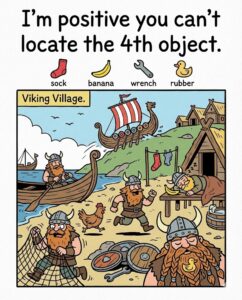
Look at this image. At first glance, it’s a chaotic scene of Vikings—symbols of strength, toughness, and adventure. They are running, working, rowing, and shouting. But look closer. Among all the action, there is one Viking fast asleep, peaceful and vulnerable.
This picture is a perfect metaphor for the life of a man, a husband, and a father. While the puzzle asks you to find hidden objects, the real secret to a happy marriage lies in finding the answer to a much deeper question: Where does a warrior go when he puts down his shield?
This text explores the silent battles men fight and why a loving relationship is the only place they can truly rest.
Contents
1. The Modern Battlefield In the old days, men fought with axes and sailed rough seas. Today, the “battlefield” has changed, but the pressure remains. Instead of stormy oceans, men face:
-
Financial stress and career pressure,
-
The overwhelming need to provide for their family,
-
The fear of failure,
-
The weight of responsibility. Just like the Vikings in the boat, many men feel they must keep rowing, no matter how tired they are, to keep the “ship” of the family moving forward.
2. The Need to Disconnect (The Sleeping Viking) Notice the Viking sleeping on the bench amidst the noise. Often, women misunderstand a man’s silence or need for downtime as laziness or distance. But psychologically, this is his recovery mode. After a day of fighting the world, a man needs a “cave”—a mental space where he can:
 Turn off his vigilance,
-
Stop solving problems,
-
Simply
bewithout demands. He isn’t ignoring you; he is recharging his energy so he can be strong for you again tomorrow.
3. The Wife as the Harbor Every ship needs a port. Every warrior needs a home. In a relationship, a woman has a superpower that she often underestimates: The power to create peace. When a husband comes home to a wife who offers warmth, acceptance, and a smile rather than immediate criticism, she becomes his harbor. She signals to his brain:
-
“You are safe here.”
-
“You don’t have to fight here.”
-
“You are loved for who you are, not just what you provide.” This emotional safety is what makes a man fiercely loyal.
4. Strength is Protective, Not Aggressive Vikings look scary, but they were protectors of their villages. Similarly, a husband’s “roughness” or stoicism isn’t a lack of feeling. It is often a shield he wears to keep the family safe. He might not always find the right poetic words to say “I love you,” but he shows it by:
-
Checking the locks at night,
-
Working late hours,
-
Fixing things around the house (like the Viking fixing the net). Recognizing these actions as
love languageschanges the entire dynamic of a marriage.
5. Navigating the Chaos Together The village in the picture is messy. There are chickens running, tools scattered, and people rushing. Life is exactly like this. It is never perfectly tidy. There will always be:
-
Unexpected problems (the hidden banana or wrench!),
-
Noise and confusion,
-
Days where everything feels out of control. A strong couple knows that they cannot control the chaos of the world. But they
cancontrol the atmosphere of their home. They decide that no matter how crazy the village gets, their bond remains the anchor.
Conclusion: Loving the Warrior and the Man The Viking image teaches us balance. It reminds us that even the toughest characters need a soft place to land. For a wife, seeing her husband not just as a provider, but as a human being who gets tired, creates deep empathy. For a husband, seeing his wife not just as a partner, but as his sanctuary, creates deep gratitude.
When a home is a place of peace, the warrior doesn’t just return to sleep. He returns to live, to love, and to be truly himself.