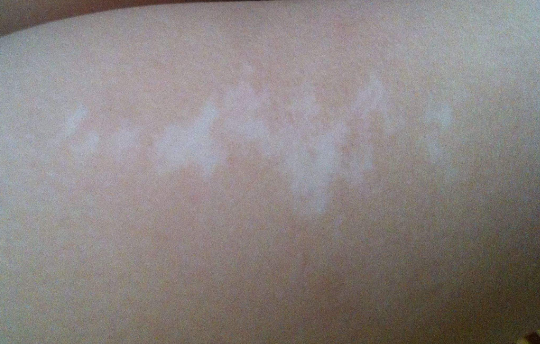
You’re applying sunscreen on a bright morning or perhaps just toweling off after a shower when you see them. A sprinkling of small, flat, porcelain-white spots, mostly on your arms or legs. They’re not itchy, they’re not raised, and they certainly don’t look like anything you’ve had before. Your first guess? A fungal infection, maybe. After all, that’s what we’re taught to think when we see strange spots.
But here’s a twist: what if these particular spots are one of skin’s most innocent, yet stubborn, secrets? What if they have nothing to do with an infection at all, but are instead a tale of sun exposure, time, and the gentle fading of your skin’s own narrative?
These white spots aren’t fungus; they’re most likely Idiopathic Guttate Hypomelanosis (IGH). Let’s break down that intimidating name. “Idiopathic” means we don’t know the exact cause. “Guttate” means drop-like. And “Hypomelanosis” means a lack of skin pigment (melanin). So, in plain English: unexplained, drop-shaped, pigment-loss spots.
The Real Story: Sun-Kissed Skin, Decades Later
Think of your skin as a vast canvas that has been gently exposed to the sun over a lifetime. The melanocytes are the tiny artist’s cells in your skin that produce melanin, the pigment that gives your skin its color and acts as its natural sunscreen.
After decades of sun exposure—even the kind you got while gardening, driving with the window down, or walking the dog—these pigment-producing cells in certain areas can simply become exhausted or slowly disappear. It’s not that they’re being attacked by an infection; it’s that they’ve quietly retired from service. Without these cells, the skin can no longer produce pigment in that specific spot, leaving a permanent, pale mark.
This is why IGH is so common in people over 40 and becomes more frequent with each passing decade. It’s not a sign of poor health or hygiene; it’s a visual diary of a life lived in the sun. They are most common on sun-exposed areas like the forearms, shins, and shoulders—the very places that have caught the most rays over the years.
Why the Confusion with Fungus?
It’s an easy mistake to make. The most common fungal infection people suspect is tinea versicolor. This fungus, which naturally lives on our skin, can sometimes overgrow and create scaly, discolored patches that may be lighter or darker than your surrounding skin.
But here’s how you can play detective and tell the difference:
- The Texture Test: Run your finger over the spot. IGH spots are typically smooth and flat. They are often slightly depressed, like a tiny, shallow divot in the skin. Fungal spots, on the other hand, are often slightly scaly or flaky.
- The Shape and Size: IGH spots are usually very well-defined, small (1-5 mm, like a confetti sprinkle), and scattered. Fungal spots can be larger and often merge into bigger, map-like patches.
- The Itch Factor: IGH is almost never itchy. A fungal infection can sometimes cause mild itching.
- The Tan Test: This is the biggest clue. When you get a tan, the skin around the IGH spot will darken, making the spot itself look even more starkly white because it has no pigment to darken. A fungal infection, however, can often be treated, allowing the pigment to return.
Should You Worry? The Reassuring Truth
In the vast majority of cases, IGH is a completely benign, cosmetic condition. It is not contagious, it is not a form of skin cancer, and it is not a sign of any underlying systemic disease. The primary concern for most people is simply the appearance.
However, it is always wise to have any new skin change evaluated by a dermatologist. Why? Because while you might be sure it’s IGH, a professional should confirm it. They can easily distinguish it from other conditions, including a very rare one called vitiligo, which involves much larger, symmetrical patches of pigment loss, or even from scar tissue.
Living With (and Minimizing) Your Confetti Spots
While there is no simple cream or magic pill to cure IGH, you do have options.
- The First and Best Defense: Sun Protection. You cannot reverse the spots you have, but you can absolutely prevent new ones from forming and make existing ones less noticeable. Daily use of a broad-spectrum sunscreen on your arms and legs will protect your remaining melanocytes from further sun damage. This won’t repopulate the retired cells, but it will keep the surrounding skin from tanning, which reduces the contrast.
- Cosmetic Camouflage. A good body makeup or self-tanner can work wonders to even out your skin tone and make the spots far less visible. Self-tanners are particularly effective because they stain the top layer of skin, and they stain the IGH spots just the same as the surrounding skin.
- Medical Treatments. If the spots bother you significantly, talk to a dermatologist. There are in-office procedures that can help, though results can vary. These include:
- Topical Retinoids: Prescription-strength creams like tretinoin can sometimes, though not always, encourage some repigmentation by stimulating skin cell turnover.
- Light Therapies: Treatments like excimer lasers or UVB phototherapy can be used to “stimulate” the pigment cells around the edges of the spots, encouraging them to migrate inward.
- Micro-needling: This procedure creates tiny injuries in the skin to trigger a healing response that can sometimes include pigment production.
These treatments require patience, are not always covered by insurance, and offer no guarantee, but they are available for those who seek them.
So, the next time you see those white spots, see them for what they are: not a sign of infection, but a map of the sunny days you’ve enjoyed. They are part of your skin’s story. While you might choose to minimize their appearance, you can also choose to see them with a kind of acceptance—a gentle, confetti-like celebration of a life well-lived under the sun.