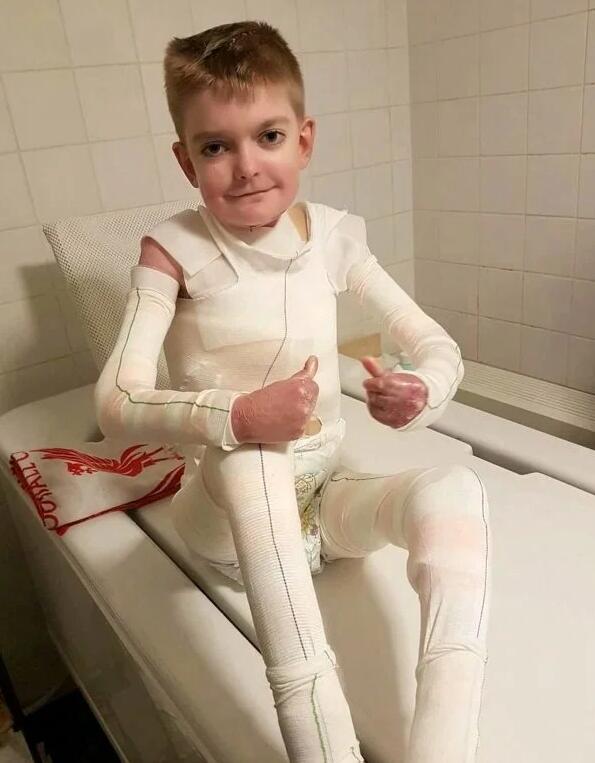
Imagine for a moment that your skin, the very barrier that holds you together and connects you to the world, is as fragile as a butterfly’s wing. Not in a poetic sense, but in a devastating, literal one. A simple hug, the gentle grasp of a parent’s hand, even the friction of a seam on clothing can cause painful blisters and open wounds. This is not a hypothetical nightmare; it is the daily reality for children born with a rare and heartbreaking condition known as Epidermolysis Bullosa (EB). Often called the “worst disease you’ve never heard of,” it means, quite literally, that a child often cannot be touched in the way we all take for granted.
The most common, and most severe, forms of EB are present from birth. The phrase “handle with care” takes on a life-altering meaning from the very first moment. A newborn with EB might arrive with skin missing on their arms and legs, as if they have been burned, simply from the trauma of passing through the birth canal. For their parents, the overwhelming joy of birth is instantly intertwined with a profound and terrifying vigilance.
The “Butterfly” Children: A World of Fragile Skin
Children with EB are often called “Butterfly Children” because their skin is considered as fragile as a butterfly’s wings. The name is poignant and beautiful, but the condition is brutally challenging. The problem lies in the microscopic “glue” that holds the layers of our skin together.
Think of your skin as being made of two layers: the outer epidermis and the inner dermis. Between them is a critical anchor, a matrix of tiny protein filaments that bind them, ensuring they move together as one. For a child with EB, due to a genetic defect, this anchoring system is faulty. Some types lack the necessary “glue” (proteins like collagen), while others have malformed structures. The result is that the layers shear apart with the slightest mechanical stress. Friction isn’t just an irritation; it’s a cause of injury.
This is why a parent’s loving touch must be recalibrated. A cuddle must be carefully planned, with soft padding and no rubbing. Picking up a child under the arms is out of the question. Dressing becomes a meticulous, hour-long ordeal of maneuvering soft, seamless clothing over a landscape of wounds and bandages. Something as simple as a child scratching an itch can create a new, painful sore.
A Day in the Life: Bandages, Baths, and Unimaginable Courage
To understand EB is to understand the relentless daily routine these children and their families endure. There is no day off.
The centerpiece of each day is often “wound care.” This is a harrowing process that can take hours. Old bandages, which may have stuck to the wounds, must be soaked off slowly and painstakingly. The bath, which should be a time of play, is instead a sterile, therapeutic procedure to gently clean open wounds that can cover most of the body. After the bath, each blister must be carefully lanced and dressed with special non-adherent bandages and gauze, which are then wrapped meticulously around limbs and the torso.
The challenges go far beyond the skin. EB affects the entire body.
- The Mouth and Throat: Blisters can form inside the mouth and all the way down the esophagus. Eating can feel like swallowing glass. Many children with severe EB are fed through a tube directly into their stomach to bypass the agony and to provide enough protein and calories to, quite literally, try to heal their skin.
- The Hands and Feet: Repeated blistering and scarring can fuse the fingers and toes, causing them to become mittened or contracted. Surgery is sometimes required to release them.
- The Eyes: The delicate membranes of the eyes can blister, leading to light sensitivity, scarring, and impaired vision.
- The Risk of Infection: With large areas of the body essentially an open wound, the constant, looming threat is infection, which can swiftly become life-threatening.
The Heartbreak and the Hope: Where Science is Stepping In
For decades, the standard of care for EB has been purely palliative: manage the pain, prevent infection, and try to improve quality of life. There is no cure. For the parents, this is a heartbreaking reality to accept. They become full-time nurses, wound care specialists, and advocates, all while grappling with the emotional toll of not being able to provide the simple, physical comfort every child craves.
However, the landscape is slowly beginning to change, offering glimmers of hope that were unimaginable a generation ago.
- Gene Therapy: This is the frontier. Since EB is a genetic disorder, the ultimate goal is to fix the faulty gene. In recent years, there have been stunning breakthroughs. One notable case involved a young boy with a severe form of EB who had lost 80% of his skin. Scientists grew genetically corrected skin cells from him in a lab, then used those cells to graft new, healthy skin over his body. The results were transformative. While still experimental and not a wholesale cure, it proved that the concept can work.
- Protein Therapy and Bone Marrow Transplants: Researchers are exploring ways to introduce the missing proteins directly into the skin or to use bone marrow transplants to provide the body with cells that can produce the necessary “glue.”
- Better Bandages and Pain Management: The development of advanced wound dressings that promote healing and cause less pain upon removal is a constant pursuit. Managing the chronic pain of EB is a critical part of care, allowing these children some semblance of a normal childhood.
What Can We Do? The Power of Awareness and Compassion
For those of us on the outside looking in, the story of EB can feel overwhelming. It’s a condition that defies our most basic instincts to protect and comfort a child. But we are not powerless.
The first and most powerful step is awareness. Sharing the story of these “butterfly children” breaks the isolation that rare disease families so often feel. Organizations like the Dystrophic Epidermolysis Bullosa Research Association (DEBRA) in the U.S. provide critical support for families, fund groundbreaking research, and advocate for patients.
We can also reframe our understanding of what it means to be touched. For a child with EB, love isn’t always expressed through a tight squeeze or a rough-and-tumble play session. It is expressed through the gentle, painstaking care of a parent’s hands during wound care. It’s in the soft tone of a voice reading a favorite story, the warmth of a gaze held across a room, and the creation of a world filled with joy that exists beyond physical touch.
The story of Epidermolysis Bullosa is one of the most profound examples of human resilience. It’s about children who face unimaginable pain with breathtaking courage, and parents who demonstrate a superhuman depth of love and dedication. It reminds us that the human spirit, though it may reside in the most fragile of containers, can be the toughest thing in the world.