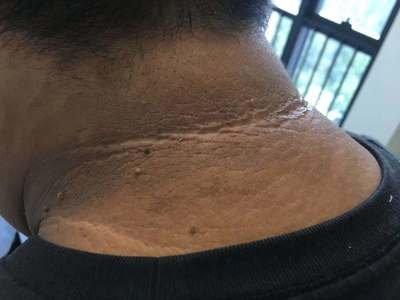
You notice it in the mirror after a shower, or perhaps a well-meaning friend points it out. On the back or sides of your neck, there’s a patch of skin that looks different. It’s darker, with a grey-brown or almost blackish hue. It’s not a sun tan—it doesn’t have crisp lines and appears in shaded folds. More strikingly, it has a distinct texture: thick, velvety, and slightly raised, as if it’s been lightly sueded. You might try to scrub it, thinking it’s just dirt or a stubborn stain, but it won’t budge.
This is not a hygiene issue. It’s not a simple age spot. This specific change has a name: Acanthosis Nigricans (AN). And while it can sometimes be genetic or linked to other conditions, its sudden appearance in adulthood is one of the skin’s most recognizable and urgent bulletins. It is very often a direct, visible sign of a profound internal metabolic disturbance: insulin resistance, frequently a precursor to Type 2 Diabetes.
The Sugar Spill: How a Hormone Problem Shows Up on Your Skin
To understand the connection, you need to follow the trail of insulin. Insulin is the hormone that acts like a key, unlocking your cells to allow glucose (sugar) from your bloodstream to enter and be used for energy.
In insulin resistance, the body’s cells stop responding well to that key. They’ve become “numb” to insulin’s knock. In response, the pancreas panics and pumps out more and more insulin, trying to force the glucose into the resistant cells. This results in chronically high levels of insulin circulating in your blood—a condition called hyperinsulinemia.
This excess insulin doesn’t just affect blood sugar. It has a powerful growth-promoting effect on certain cells, particularly skin cells (keratinocytes) and, in some cases, underlying tissue. The dark, velvety patches of AN are essentially an overgrowth of skin triggered by this flood of insulin. The dark color comes from an increase in skin pigment (melanin) within the thickened skin.
Think of it this way: your skin is acting like a bar graph for your insulin levels. The darker and more velvety the patch, the louder your body is shouting about its struggle to manage sugar.
The Common Sites: A Map of Friction and Hormones
AN doesn’t appear randomly. It favors areas where skin experiences natural friction or folds, which seems to exacerbate the insulin-driven overgrowth. Classic locations include:
- The back and sides of the neck (the most common and noticeable).
- The armpits.
- The groin area.
- Skin folds, such as under the breasts or over the knuckles.
- Sometimes, even the elbows and knees.
It’s More Than a Skin Condition: The Associated Risks
The appearance of AN is rarely an isolated event. It’s a red flag planted firmly in a field of related health risks. If you have AN, your body is very likely signaling that you are also dealing with, or at high risk for:
- Type 2 Diabetes: This is the most direct link. AN is considered a major cutaneous marker for diabetes risk.
- Prediabetes: The stage where blood sugar is elevated but not yet at diabetic levels.
- Metabolic Syndrome: A cluster of conditions including high blood pressure, high blood sugar, abnormal cholesterol levels, and excess abdominal fat.
- Polycystic Ovary Syndrome (PCOS) in women, which is deeply connected to insulin resistance.
- In rare cases, sudden and severe AN can be associated with internal cancers (usually gastric), but this is less common and presents differently, often with rapid onset and more widespread skin involvement.
Your Action Plan: From Skin Change to Systemic Health
Seeing AN on your skin is not a cause for despair—it’s a powerful opportunity. It’s your body giving you a visual, tangible warning sign years before more serious complications like heart disease, nerve damage, or kidney failure might develop.
- Do Not Scrub or Bleach It. Topical treatments will not address the root cause. You must treat the inside.
- Schedule an Appointment with Your Doctor. Be direct: “I have developed dark, velvety patches on my neck that I believe may be acanthosis nigricans. I am concerned about my insulin and diabetes risk.”
- Prepare for Key Tests. Your doctor will likely order:
- A Fasting Blood Glucose Test.
- An HbA1c Test, which gives your average blood sugar level over the past three months.
- A Fasting Insulin Level (to directly measure hyperinsulinemia).
- A Lipid Panel to check cholesterol.
- Embrace Lifestyle as Medicine. The most effective treatment for the insulin resistance causing AN is the same for prediabetes and Type 2 Diabetes:
- Weight Loss: Even a modest 5-10% reduction in body weight can dramatically improve insulin sensitivity.
- Dietary Changes: Focus on a whole-food, low-glycemic diet. Reduce refined carbohydrates, sugars, and processed foods. Increase fiber, lean protein, and healthy fats.
- Regular Exercise: Both aerobic activity and strength training help your muscles use glucose more efficiently, reducing the demand for insulin.
- Know That the Skin Can Improve. As insulin levels normalize through lifestyle changes and/or medication (like metformin), the skin patches often slowly lighten and improve in texture. They may not disappear completely, but their fading is a visible sign of your improving internal health.
That velvety shadow on your neck is not a stain to be hidden. It is a bulletin. It is your skin doing its duty, making an invisible metabolic crisis visible to the naked eye. By heeding this specific, textured warning, you have the chance to change the trajectory of your health, potentially preventing diabetes and its serious consequences before they fully take hold. It is, in a very real sense, a second chance written on your skin.