The rumors began the same week the snow melted off the foothills surrounding Denver, Colorado, a slow thaw that seemed to wake not only the trees and sidewalks, but also the long sleeping whispers in the halls of Crescent Hills Medical Center, a hospital known for its polished floors and the smell of lemon disinfectant that never quite faded. For Dr. Conrad Avery, a neurologist who believed in evidence above all else, the whispers felt like a pebble in his shoe. Small enough to ignore, yet persistent enough to command attention.
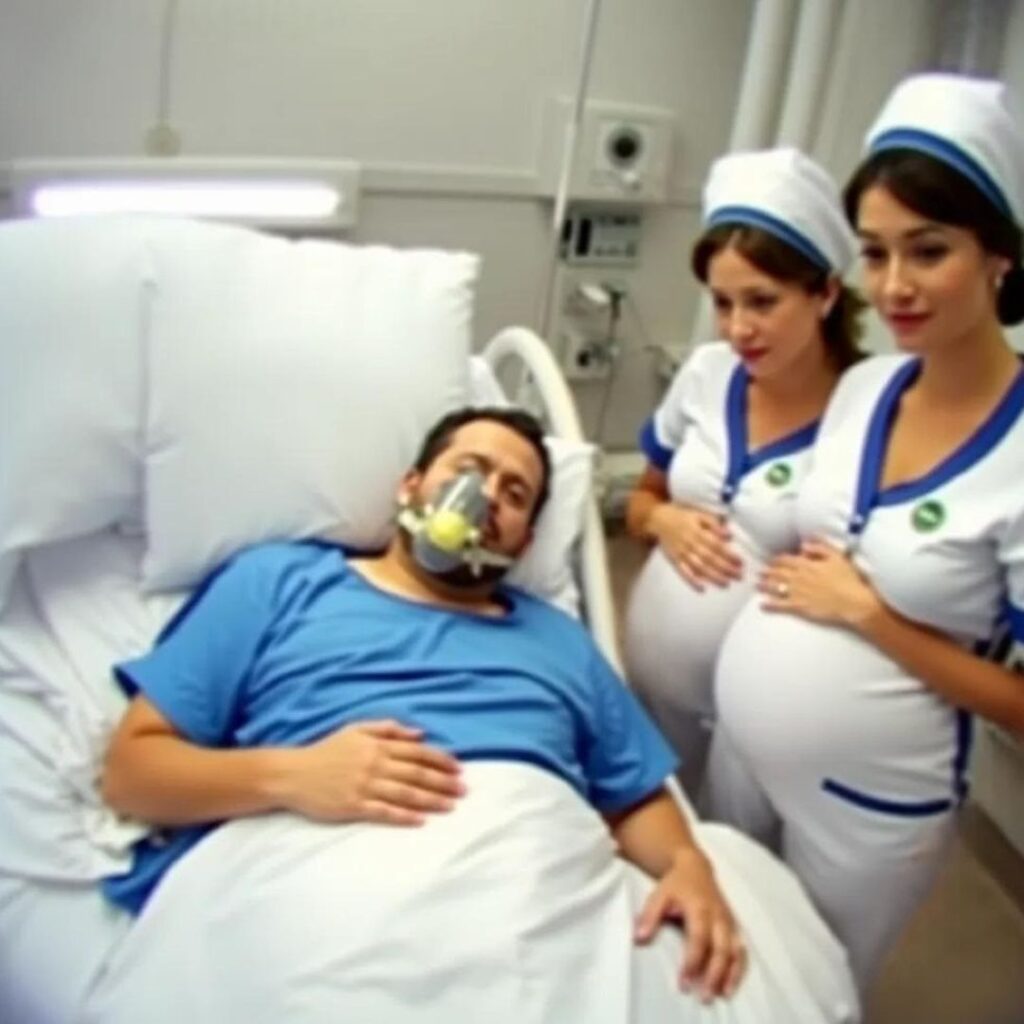
The patient at the center of it all was Logan Price, a firefighter who had suffered a traumatic brain injury while rescuing tenants from a burning apartment complex nearly four years earlier. His file described him in clinical terms, but the framed news article outside Room 614 portrayed him as a hero. A photograph captured the moment before the fall, his face streaked with soot, his arms carrying a frightened child to safety. After the accident, he had been placed on long term life support, unresponsive and motionless. His room became a quiet monument to suspended hope.
Doctor Avery had never seen anything unusual about the case. Logan’s vitals were stable. His brain activity barely flickered. The case felt tragic, but unremarkable from a neurological standpoint. That was why the first announcement felt like coincidence rather than omen. A nurse named Tessa Monroe requested a meeting and informed him she was pregnant after years of infertility. When he congratulated her, she seemed startled.
“I do not understand how it is possible,” she whispered, clasping her hands together so tightly her knuckles turned white. “My husband and I have been trying for a decade. Our specialists told us it could not happen. Something changed after I began my night rotation with Mr. Price. It feels connected, even though I know that makes no sense.”
Conrad offered what comfort he could and insisted that coincidences did occur. He documented her emotional distress and thought little more about it. Two months later, Jeanine Porter, another night nurse assigned to Logan, requested a private meeting with the same news. She was visibly shaken.
“It cannot be chance,” she insisted, voice trembling. “I am not involved with anyone. I know how it sounds, but I feel as though something is wrong and I do not know how to say it without sounding irrational.”
By the time the third nurse, Brielle Summers, arrived with swollen eyes and a positive test in her shaking hand, Conrad could no longer pretend the situation did not demand scrutiny. Three pregnancies connected by nothing except their assignment to the same comatose patient. Three sets of medical charts indicating circumstances that defied ordinary explanation. He began reviewing security logs, badge scans, anything that might reveal unauthorized access to Room 614. He found nothing. The room appeared undisturbed each time he checked, still and lifeless, with Logan lying under crisp white sheets.
The hospital board summoned him for an emergency meeting when the fourth pregnancy was reported. The members spoke in low voices, each sentence laced with anxiety. The chairwoman, Katherine Bell, leaned forward.
“We cannot allow gossip to grow. If this escalates, we risk a press frenzy. This hospital’s reputation is at stake. You will investigate quietly and give us answers grounded in science.”

Conrad promised to do so, although his confidence felt shaken. He spent nights combing through case studies and obscure journals, searching for precedents involving neurological conditions that triggered bizarre hormonal effects in caregivers. He found nothing credible. The words supernatural conception appeared in fringe material, but he dismissed them as sensationalized nonsense.
When the fifth nurse, Marina Foster, visited with trembling lips and said she was frightened to sleep, Conrad felt something cold unravel inside him, like a cable snapping in the dark.
“I do not feel alone when I sit with him,” Marina whispered. “Sometimes I feel watched. Sometimes I feel something brush past me, although nothing is there. I know how absurd it sounds. I am sorry.”
It was then that Conrad took action. He waited until the corridors fell silent and the facility lights dimmed to night mode. Then he unlocked Room 614 using his clearance card and stepped inside. The machines hummed steadily. Logan’s chest rose and fell. The floral arrangements from his family still hung on, wilted at the edges but intact. Conrad moved toward the ventilation grate in the corner, where he discreetly inserted a small camera with audio pickup and a motion trigger. His pulse thrummed as he worked.
“Forgive the intrusion,” he murmured to the unconscious man. “I need to protect these people. I need to protect you too.”
He sealed the grate and left, feeling the weight of the door closing behind him like something irreversible.
The footage waited until morning. Conrad brewed coffee with hands that trembled slightly and locked himself inside his office. He downloaded the files, opened the first recording, and pressed play. For hours, nothing happened. A nurse adjusted blankets. Machines beeped. Lights flickered with the rhythm of electricity. He felt foolish for allowing his imagination to run rampant.
At precisely 3:51 a.m., the screen changed. The overhead lights flickered as though struck by static. A bluish glow pooled near the ceiling. Logan’s eyelids fluttered, something that should have been impossible given his neurological state. Conrad leaned closer, breath held.
Logan’s body remained still, but something seemed to rise. A silhouette. A shimmer. A translucent figure with Logan’s features, but tinted in pale moonlight. It moved toward Marina, who slept upright in the chair, exhaustion claiming her. The figure extended a hand and touched her gently on the crown of her head. There was no violence. No intimacy. Only contact, like a parent waking a child from a nightmare. Marina flinched, but did not wake. A surge of energy rippled through the monitors. Heart rate. Brain activity. Everything spiked.
The figure returned to the bed and lay down, dissolving as it aligned with the physical body. Conrad sat very still. He replayed the scene repeatedly, unable to accept what he saw, yet unable to deny it existed. Later that afternoon, he summoned Detective Rhea Dunham of the Denver Police Department. She watched the footage twice, her jaw tightening.
“I have never seen anything like this,” she said quietly. “I cannot classify this as a crime. I also cannot pretend it is normal. We need to isolate the patient and limit access until we understand what is happening.”

The hospital complied. Room 614 was sealed. A new wing was prepared in the older part of the facility, where fewer visitors would wander. Logan was transferred under supervision. His family was informed that there were concerns about environmental contamination. The truth was not disclosed.
In the days that followed, Marina’s pregnancy progressed normally. So did the others. There were no medical complications. The nurses reported vivid dreams, each one describing scenes of fire and smoke, as though someone else’s memories had been placed inside their minds. When they woke, they felt unafraid, as though the dreams carried comfort rather than dread.
Conrad found himself lingering outside the isolation ward each night, staring through the glass at Logan, who lay unchanged. He questioned whether consciousness could separate from the body. Could a spirit act independently while the brain lay dormant. Could trauma open a door between worlds the way a fracture opens a bone. Science had no language for those possibilities.
One night, Conrad turned away from the window and found Detective Dunham standing beside him.
“Do you think he knows what he is doing,” she asked.
Conrad shook his head. “I do not believe this is intention. It feels more like a reflex. Like the brain firing in dreams. The nurses are not harmed. Their babies appear healthy. It is extraordinary, but not malicious.”
Rhea considered this. “The board wants to keep all of this private. They fear panic. They fear lawsuits. They fear being called insane. I cannot say I blame them.”
“Do you think I should resign,” Conrad asked.
“What do you want,” she countered.
He exhaled. “To understand. To help. To make sense of the impossible.”
The detective placed a hand on his shoulder. “Then stay until that is no longer possible.”
Months passed. The pregnancies reached their terms. The babies were born healthy, each one with eyes the color of storm clouds just before rain. None of the mothers experienced medical complications. Each child seemed strangely calm, drawn to quiet places. Nurses joked that the nursery felt like a monastery.

Logan remained in his coma. His vital signs never shifted. The camera in his new room showed no further anomalies. The phenomenon ended without explanation.
Conrad eventually left Crescent Hills Medical Center. He did not resign in disgrace. He simply stepped away, seeking something that science could not yet define. He traveled to conferences and spoke to researchers about the importance of humility. He told them to consider the possibility that human understanding was not the ceiling of reality.
Room 614 was never reopened. The door remained locked. The fluorescent light above it glowed at odd times. Staff avoided the hallways around it during late shifts. Some swore they heard footsteps inside, slow and uncertain, like someone remembering how to walk.
On certain mornings, just before sunrise, Conrad visited the hospital courtyard. He looked up at the windows of the isolation wing. He imagined Logan’s spirit moving through dreams, searching for warmth in a world that had gone cold. He imagined those children growing, carrying echoes of someone who never meant to touch their lives.
He whispered into the wind, “We are learning. We are trying. Forgive us for not knowing.”
No answer came. Only the hum of the city waking, the world moving forward, unaware of the truths that slept behind locked doors.