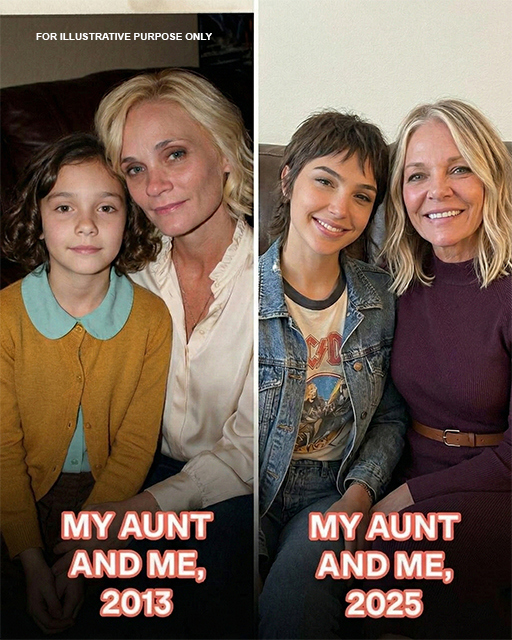
Eliza learned early how to make silence useful.
As a child, she would sit at the small kitchen table in her aunt’s apartment, her legs dangling high above the linoleum floor. The laminate surface was chipped at the corners, and one leg wobbled unless a square of folded cardboard was tucked beneath it. Eliza never complained. She spread her paper carefully, smoothing each sheet as though it were precious, and drew until her colored pencils shrank into fragile stubs she could barely hold.
Her aunt, Amara, moved through the apartment with brisk efficiency. She worked long hours at a dental office and often came home tired, but her eyes were always soft when they rested on Eliza. She never asked why the child drew so much. She never pushed for explanations or forced conversations. Instead, she made sure the paper drawer stayed full and that a lamp stood by the table, bright enough to keep shadows away.
Silence was the only inheritance Eliza’s parents left her.
They were not violently cruel. There were no shattered plates or slammed doors, no bruises hidden beneath long sleeves. Their neglect was quieter, wrapped in distraction and self-absorption. It appeared in forgotten school pickups and unanswered calls from teachers. It showed itself in missed birthdays, each softened by vague apologies and promises to “celebrate properly next weekend.”
Next weekend never came.
When Eliza was nine, her parents delivered their news with unsettling lightness. They were both remarrying. They were both moving to different cities. They had, they explained, found new beginnings.
“There just won’t be enough space,” her mother said, adjusting the sleeve of her blouse as though discussing furniture placement.
“You understand, right?” her father added, smiling too brightly.
Eliza did not understand. She felt as if someone had pushed her underwater and was waiting to see whether she would sink or swim. Still, she nodded. Children often nod when they are too stunned to protest.
They packed her belongings into two suitcases. One held her clothes. The other held her sketchbooks, pencils, and paint sets. Then they drove her across town to Amara’s apartment building.
They stood in the doorway for less than three minutes.
Her mother gave her a brief, distracted hug that smelled faintly of perfume and impatience. Her father patted her head, the gesture oddly impersonal, as if she were a neighbor’s pet.
Then they turned and walked down the hallway toward the elevator, toward their car, toward their new spouses and new lives.
Eliza watched until the elevator doors slid closed.
Amara placed a steady hand on her shoulder.
“Well,” she said gently, guiding her inside, “I suppose this is home now.”
She set a plate of buttered noodles in front of her niece. Eliza ate in small, mechanical bites. That night, she cried without sound into a pillow that did not yet smell like her.
Life continued.
For months, Eliza barely spoke. She attended school, completed her homework, washed dishes when Amara worked late, and retreated into drawing whenever the quiet grew too heavy. The spare room, once cluttered with storage boxes, became hers. Amara cleared it out without ceremony and painted the walls a soft cream.
Nearly a year passed before Eliza began answering questions in full sentences instead of nods.
She never asked about her parents. Amara never brought them up. Their silence on the subject became an unspoken agreement, a boundary neither crossed.
Over time, drawing evolved into painting. Amara enrolled her in an affordable weekend art class at the community center. Eliza fell in love with oils, with the slow blending of color, with the way light could be captured and held.
Her teachers noticed something unusual in her work. Even as a teenager, she painted moments suspended on the edge of change. A door is half open. A hand reaching but not touching. A figure standing at the threshold of departure. There was tension in every brushstroke, an emotional honesty that felt fragile and fearless at once.
By adulthood, Eliza had built a modest career. She rented a small studio and worked part-time at a bookstore to cover expenses. Her paintings were featured in local galleries. A few sold, then a few more.
People often lingered in front of her canvases longer than expected. Some cried quietly. Others approached her with hesitant gratitude, telling her they felt understood.
Eliza accepted the praise with humility. She was grateful that something born from her silence could resonate with others.
She never heard from her parents.
Years passed. Amara grew older, her hair silvering and her movements slower. Eliza’s career expanded gradually until, almost overnight, it surged. An online arts magazine published a feature titled “The Painter of Unspoken Things.” A prominent gallery owner discovered her website and offered her a solo exhibition. The show sold out within hours of opening.
Her inbox flooded with invitations, interviews, and commissions.
And exactly as she had always suspected, her parents reappeared.
It was a Sunday morning in early spring when they knocked on her door.
Eliza expected a courier delivering supplies. Instead, she opened the door to find her mother and father standing side by side in the hallway.
Her mother wore a pale blue coat and an expression carefully arranged to resemble warmth. Her father’s shirt was crisply pressed, his posture confident. They looked well and comfortable.
“Eliza!” her mother exclaimed brightly, as though they had parted only months before. “You look incredible.”
“You’re doing so well,” her father added, glancing past her into the spacious apartment. “We’ve been following your success.”
Eliza did not smile. She held the door half open, her body blocking the entrance.
A long pause followed.
“Aren’t you going to invite us in?” her mother asked, her tone edged with forced cheerfulness. “We are your parents.”
“No,” Eliza said calmly.
The word seemed to echo in the narrow hallway.
Her father cleared his throat. “We know things were complicated. We were young. We made mistakes. But we thought perhaps it’s time to reconnect.”
“Now that you’re stable,” her mother added quickly. “Now that everything has worked out.”
The implication hung between them.
Now that you are successful.
Now that you might be useful.
“I think you should leave,” Eliza said.
Her mother’s expression faltered. “Eliza, we’re family.”
She met her father’s eyes and held them steadily.
“My family is the person who stayed,” she replied. “Not the ones who left.”
Then she closed the door.
She leaned against it and listened to their muffled whispers in the hallway. After a moment, she heard their footsteps retreat and the elevator descend.
Only then did her hands begin to tremble.
Three days later, two letters arrived.

The first was from her mother. It contained no apology. Instead, it described financial strain. Her stepfather’s business was struggling. Her half-siblings, children Eliza had never met, were enrolled in expensive programs. There were tuition fees and summer camps that they did not want the children to miss.
“As part of the family,” the letter concluded, “we know you’ll want to help.”
The second letter, from her father, arrived that same afternoon. It detailed a failed investment, unexpected debts, and the cost of supporting a new household.
“You’ve been blessed with extraordinary success,” he wrote. “Surely you can spare some assistance.”
Eliza read both letters twice. By the third reading, she laughed softly, not from amusement but from disbelief.
They felt no shame. They did not even attempt regret. They believed she owed them something for the simple fact of existing.
But she owed them nothing.
Still, something stirred within her. It was not forgiveness. It was not revenge. It was a desire to reclaim the narrative they had once dictated.
The following month, she prepared for her first major solo exhibition at a prestigious downtown gallery. She titled it Inheritance.
Critics speculated about generational trauma and emotional lineage. They were not entirely wrong.
The paintings were stark and luminous. She depicted rooms emptied by departure, children seated at kitchen tables too large for them, adults walking away with indistinct faces. Suitcases rested at thresholds. Shadows stretched long across doorsteps.
Her parents received invitations.
She wondered whether they would come.
They did.
They arrived early, impeccably dressed and smiling as if the evening belonged to them. Her mother introduced herself to strangers as “the artist’s mother.” Her father lingered near prominent collectors, nodding thoughtfully in front of canvases that bore no tribute to him.
Eliza observed from across the room, her expression serene.
The final room held the largest painting in the exhibition.
It dominated the wall.
Two adults walked away from a small child standing on a doorstep. The adults’ features were blurred beyond recognition, but their posture was unmistakable. They faced forward without hesitation. The child held a faded suitcase. Her shadow, long and solitary, stretched behind her.
At the bottom of the canvas, Eliza had written in careful script:
Some inherit love. Others learn to survive without it.
The room fell quiet.
A guest, unaware of the tension, asked her parents whether the painting was autobiographical.
Her mother’s face drained of color. Her father’s jaw tightened.
Eliza stepped forward before they could answer.
“This series explores the emotional legacy we receive,” she said to the gathering crowd. “Sometimes what we inherit isn’t material. Sometimes it’s absence.”
Her voice was steady and clear.
Her parents slipped out before the evening ended.
A week later, her mother called.
“How could you?” she demanded, her voice trembling with outrage. “You humiliated us. People are asking questions.”
“I told the truth,” Eliza replied.
“You made us look like monsters.”
“You made those choices,” she said quietly.
“We were young,” her mother insisted. “We didn’t know what we were doing. But you’re successful now. Surely you can let the past go.”
“I did,” Eliza answered. “A long time ago.”
“So you won’t help us?”
“No.”
Her mother ended the call.
Her father tried the next day, his tone more restrained.
“Your stepbrother needs surgery,” he said. “It’s expensive. We thought, given your position…”
“No,” Eliza repeated.
“You’re being cold.”
“I’m being honest.”
There was a long silence before he disconnected.
When the calls stopped, Eliza did not feel victorious. She felt steady and grounded.
A few weeks later, Amara visited the gallery.
She moved slowly now, her hands marked by age, but her gaze remained sharp. She studied each painting carefully, lingering in the final room longer than the rest.
When she turned to Eliza, her eyes shone with quiet pride.
“You told the truth,” she said.
“I had to.”
“Good. Truth clears the air, even when it stings.”
That evening, they returned to Eliza’s apartment and shared a simple pasta dinner, just as they had years ago. Amara reached across the table and squeezed her niece’s hand.
“I never knew if I was doing it right,” she admitted. “Raising someone else’s child.”
“You did more than right,” Eliza said softly. “You gave me a home.”
“I only gave you space.”
“You gave me belongings,” Eliza replied. “That’s everything.”
Amara smiled, her eyes warm.
Months passed. Her parents never contacted her again. They faded back into their separate lives, as distant as they had always been.
Eliza’s art began to change.
Her new series was lighter. She painted morning sunlight filtering through kitchen curtains. Two cups of tea steaming on a small table. Hands passing warm bread. The quiet comfort of someone who stays.
Her work still held depth, but the sharp edges softened. Critics noted a shift toward hope.
Eliza understood why.
She had inherited silence, but she had chosen her own voice.
She had inherited abandonment, but she had built her own family.
One evening, as she prepared to sign a finished canvas, she paused. The painting depicted a modest kitchen, sunlight pooling across a table set for two. In the corner, a paper drawer overflowed with fresh sheets.
She lifted her brush and wrote her name across the bottom.
Clear. Steady. Entirely her own.
Her story had not ended the day her parents drove away.
It ended here, in a home built on loyalty rather than obligation, surrounded by love freely given and fiercely protected.
For the first time in her life, Eliza did not feel abandoned.
She felt chosen, by herself.