When my husband left me during my maternity leave, I told myself I’d survive the heartbreak quietly. I just never imagined I would be standing at his wedding months later, watching everything unravel.
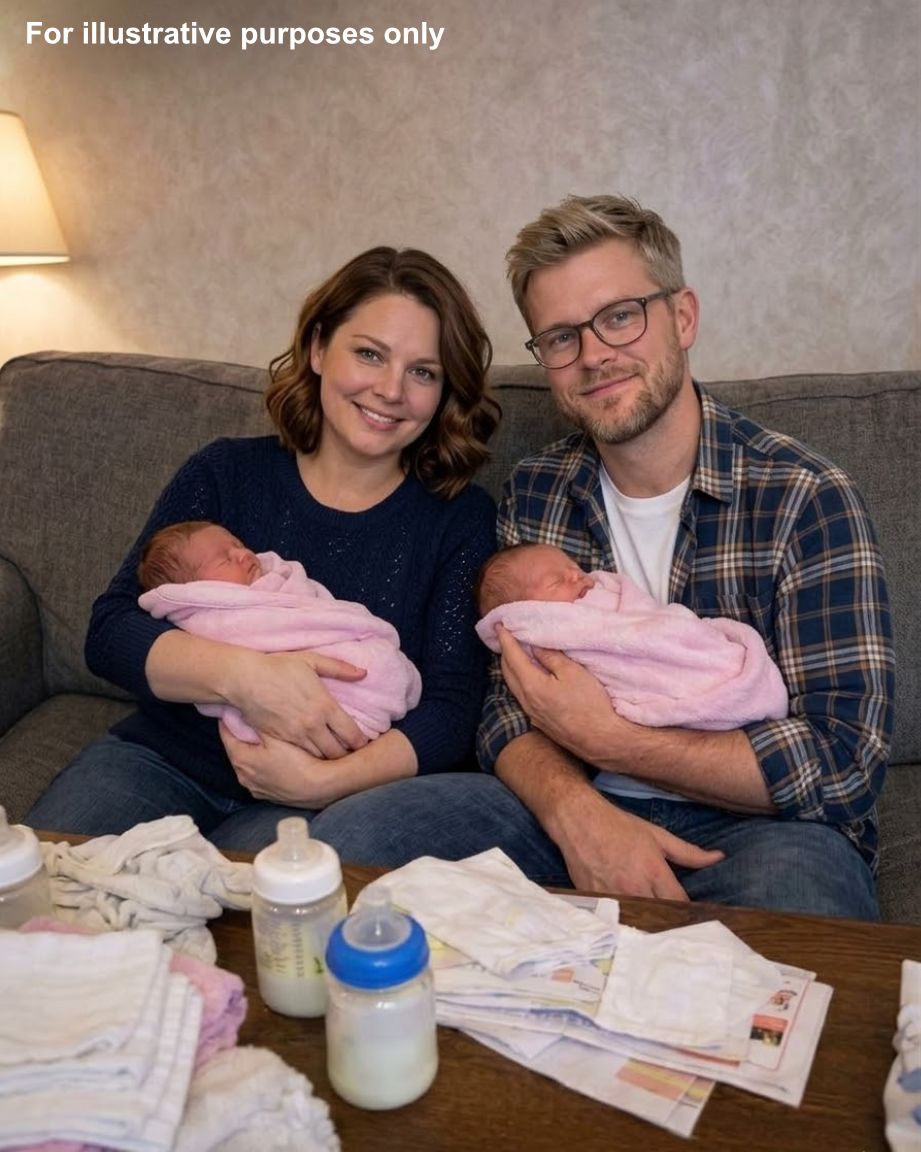
I’m 31 and I used to think I was happy.
Back then, I really believed my husband, Thatcher, and I were solid.
We’d been married for four years when we finally welcomed our twin girls.
Then we were completely overwhelmed by sleepless nights, baby bottles, and tiny socks scattered everywhere. I thought the chaos just meant we were building something strong together.
I remember standing in the nursery at 2 a.m., one baby crying in the bassinet while the other hiccupped against my shoulder, telling myself that this was exactly what love looked like.
I believed that having a messy, loud life was totally worth it.
But somewhere in those early months, while I was home on maternity leave with the babies, Thatcher started pulling away from me.
It wasn’t dramatic at first—just subtle.
My husband stopped sitting beside me on the couch.
He also started answering texts with his body angled away from mine. When I asked, “Who keeps messaging you this late?” he’d just shrug and say, “Work stuff. Don’t start.”
But I wasn’t trying to start anything. I was just trying to hold our whole world together.
One night, while both babies were finally asleep, Thatcher sat across from me and said calmly, “I want a divorce.”
There was baby formula drying on my shirt. I remember that detail more than anything else.
I actually laughed because the words didn’t even register in my brain.
“Stop,” I said. “I’m way too tired for jokes.”
“I’m not joking.”
My stomach dropped so fast I had to grip the edge of the couch.
He promised he’d be a good father, pay child support, and show up for them.
“I’ll still take care of them,” he said. “I’m not walking away from my kids.”
“I just don’t love you anymore,” he added.
The way he said it was almost gentle, as if he thought that made the blow a little kinder.
“You don’t love me,” I repeated. “Or do you just not love the responsibility?”
He didn’t give me an answer to that.
“Is there someone else?” I asked.
Silence.
That silence should’ve told me everything I needed to know.
No matter what I said, Thatcher refused to change his mind.
When the divorce was finalized, I signed the papers with one hand while balancing Emma on my hip.
My lawyer avoided eye contact when he explained the child support calculations to me.
Two months later, Thatcher and my cousin Sloane—my father’s niece—announced their engagement.
They didn’t even have the decency to tell me about it privately.
They told me at my Aunt Denise’s backyard barbecue.
I only showed up because I refused to hide in my house forever.
Thatcher stood beside the much younger Sloane like he’d won some kind of prize. She held out her hand, flashing a diamond that looked way bigger than what was practical.
“We didn’t plan for it to happen like this,” she told a group of relatives. “But when it’s right, it’s right.”
Our family was split right down the middle. Some were shocked, but most just shrugged and said, “The heart wants what it wants.”
I wanted to scream that hearts shouldn’t want married men with newborn twins.
But I was shattered.
However, I didn’t collapse in public. I saved that for the shower at home, where no one could hear me.
Only my younger sister, Piper, and my mom stood firmly beside me.
My 29-year-old sister didn’t sugarcoat a thing. “They’re rewriting the whole story,” she told me one night at my kitchen table. “They’re acting like you two just drifted apart.”
“He told people we were unhappy for years,” I said.
“Were you?”
“No.”
Six months later, they were planning a lavish wedding.
Of course they were. Sloane always loved being the center of attention.
She was the type of 27-year-old who was obsessed with mood boards and themed cocktails.
She posted wedding countdowns on social media as if theirs was some kind of epic romance.
And yes, I was invited. “You’re still family,” they said.
Sloane had the nerve to text me that herself.
“I really hope you’ll come,” she wrote. “We want peace.”
I almost threw my phone across the room.
Instead, I replied, “I’ll think about it.”
I thought about it thoroughly and decided to go, but I went alone.
The twins stayed home with a babysitter.
I chose a navy dress that fit my body as it was, not how it used to be. I curled my hair.
I walked into that ballroom with my shoulders back.
Sloane’s closest relatives circled me all evening, but I refused to leave because I didn’t want anyone to see how much the ground beneath me had cracked.
Our family members were praising the bride’s glow, her luck, and her “upgrade.”
“She looks radiant,” one cousin said, smiling at me as if I should agree.
“Thatcher’s such a catch,” one aunt whispered. “He’ll make her so happy.”
I smiled and nodded, but I shot pleading looks at my sister, who’d arrived earlier, until she swooped in and rescued me from the endless conversations.
Piper slid beside me with two glasses of champagne. “You’re handling this way better than I would,” she said, loud enough for the nosy relatives to hear.
“I’m not here to handle it,” I smiled. “I’m here to witness it.”
She squeezed my hand. I met her eyes.
Then came the dances.
First, Thatcher with his mother, then Sloane with her father.
Thatcher looked relaxed and confident, like a man who believed consequences were only for other people.
Finally, the lights dimmed for the newlyweds’ first dance.
They spun beneath the spotlights, smiling like they’d rewritten fate.
And then the music cut.
At first, everyone laughed awkwardly. Someone clinked a glass.
The DJ, Arlo, cleared his throat and made an announcement that sent a gasp through the room, and then there was complete silence.
“Before the first dance continues,” he said carefully, “there’s a special request from the groom’s ex-wife.”
Every eye turned to the bride and groom, and then straight to me.
I had to bite the inside of my cheek to keep from laughing out loud.
Because for the first time since my divorce, I wasn’t the one about to be embarrassed.
A ripple of confusion moved across the ballroom.
Then the massive screen behind the dance floor flickered to life.
The first image appeared.
A screenshot of a text message from Thatcher.
“I’m barely getting by. I can’t afford full child support right now.”
The date glowed clearly at the top, showing that the message was sent months before the wedding.
I heard someone whisper, “What is that?”
The next slide appeared.
A bank transfer confirmation. It was less than half of the court-ordered child support amount, and it was sent the same week as Thatcher’s text.
Then another message.
“I’m stretched thin. Please don’t make this harder than it already is.”
The room began buzzing.
Sloane’s smile slowly disappeared. “Thatcher?”
Another slide replaced the last.
Wedding venue deposit: $18,750. Paid three days after that text.
Gasps rang out.
The screen kept changing.
Designer dress invoice for $5,000.
Honeymoon reservation in Bora Bora with a nonrefundable deposit.
All time-stamped within the same weeks and months when he told me he was struggling.
Thatcher went pale. “Turn it off,” he snapped at the DJ.
DJ Arlo didn’t move.
Because my mom, Beatrice, had handed him the flash drive and given him instructions on what to say and do long before Piper and I arrived that day. She told him it was a surprise for the whole family.
Sloane turned to Thatcher, her voice shaking. “Tell me that’s fake.”
“It’s taken out of context,” he said quickly.
“Out of context?” her father thundered, rising from his seat. “Those are financial records!”
Thatcher’s jaw tightened. “I had expenses. Transitions. It wasn’t stable at the time.”
My mom stood up then. “Your daughters also need stability. They’re infants.”
Silence dropped like a curtain.
Sloane stared at him. “Did you lie to your ex-wife?”
He hesitated.
“I didn’t lie,” he said weakly. “I just didn’t disclose everything.”
The bride’s father let out a disbelieving laugh. “That’s called misrepresentation.”
Murmurs turned into sharp accusations.
“You said she was exaggerating!”
“You told us she was bitter.”
“I defended you!”
Sloane stepped backward as if Thatcher had physically shoved her. “You told me she was draining you. You said she was trying to ruin your life.”
Thatcher looked at me then.
As if this was all my fault.
“You planned this,” he accused.
“Yes,” I said, my voice unshakable.
“You embarrassed me in front of everyone,” he said.
“No,” I replied calmly. “You did that yourself when you lied to me.”
Sloane’s mother grabbed Thatcher’s arm. “Is this true? Did you claim hardship while paying for this wedding? Answer me!”
Thatcher rubbed his forehead. “I didn’t think it would matter. The court doesn’t track every detail.”
“That’s not the point!” Sloane cried. “You said you were sacrificing to build our future!”
He reached for her hand. She pulled it away.
The room wasn’t on his side anymore.
He’d been the charming guy who “fell out of love.”
Now he was the man who shortchanged his babies to fund a honeymoon.
I stepped forward, not to gloat, but because the silence demanded it.
“The first month after the divorce,” I said steadily, “he sent half the support and told me he couldn’t afford more.”
I looked around the room.
“I believed him at first.”
That part was true.
“When the second reduced payment came with another excuse, I started checking our old joint statements. I cross-referenced the dates. I stayed up during midnight feedings, taking screenshots while rocking twins who didn’t understand why their dad wasn’t there.”
Sloane’s eyes flicked toward me.
“My sister,” I continued, nodding toward Piper, “became Sloane’s friend. Not because we wanted drama, but because we wanted proof.”
Piper stepped forward slightly, her chin high. “You sent me vendor invoices, bank statements. You were proud of them.”
Sloane’s face flushed deep red.
“You were spying on me?”
“We were documenting reality,” Piper answered evenly.
I looked back at Thatcher.
“You thought I was too overwhelmed to notice,” I said. “I could’ve gotten over your betrayal with Sloane. But you thought I’d just accept whatever you sent and stay quiet.”
He didn’t deny that.
The screen behind him froze on a final split image: his message claiming hardship right beside the venue deposit.
Perfectly aligned.
Sloane suddenly ripped off her veil.
“You ruined this!” she shouted at him.
“No, you’re overreacting,” he fired back, his voice rising.
Her father stepped between them. “It’s dishonesty. And it’s ugly.”
Chairs began scraping against the floor as guests stood up.
One aunt muttered, “I can’t stay for this.”
Another shook her head. “Those poor babies.”
Our relatives were finally talking about Lily and Emma.
Sloane’s voice broke into something raw. “If you lied about this, what else did you lie about?”
He opened his mouth. Nothing came out.
“I want this annulled,” she said, her voice loud and shaking. “I’m not staying married to someone who practically abandons his own children.”
I found her anger ironic.
Thatcher looked stunned, as if he truly believed he’d done nothing wrong.
Guests began filing toward the exits. Conversations overlapped.
“This is a mess.”
“I knew something felt off.”
“He moved on too fast.”
I felt Piper take my hand, our mother already standing beside us with a smile.
“You ready?” she whispered.
I nodded.
Before leaving, I looked at Sloane one last time.
“Congratulations,” I said quietly. “You got the prize.”
There was no sarcasm in my tone, just the truth.
Thatcher had thought he’d won when he walked out of our house. He thought he’d escaped diapers and responsibility and stepped into something shiny and new. He believed I would be too exhausted, too heartbroken, or too busy raising twins to ever challenge him.
He underestimated me.
He took for granted what a mother could do when her children were treated like optional expenses.
As we walked toward the doors, more family members followed behind us instead of staying with the bride and groom.
Outside, the cool night air hit my face, and I inhaled deeply.
Inside the ballroom, Sloane was still shouting.
My mom slipped her arm around my shoulders. “You did well.”
I smiled. “Thanks for your and Piper’s help throughout this.”
I looked back at the glowing windows of the ballroom.
I realized Thatcher thought abandoning us made him bold, but all it did was show everyone exactly who he is.
A liar, a cheat, and a man who thought love meant upgrading instead of committing.
And as we walked to the car together, I didn’t feel shattered anymore.
I felt steady.
Because he didn’t win.
He exposed himself.
And I never had to raise my voice to do it.