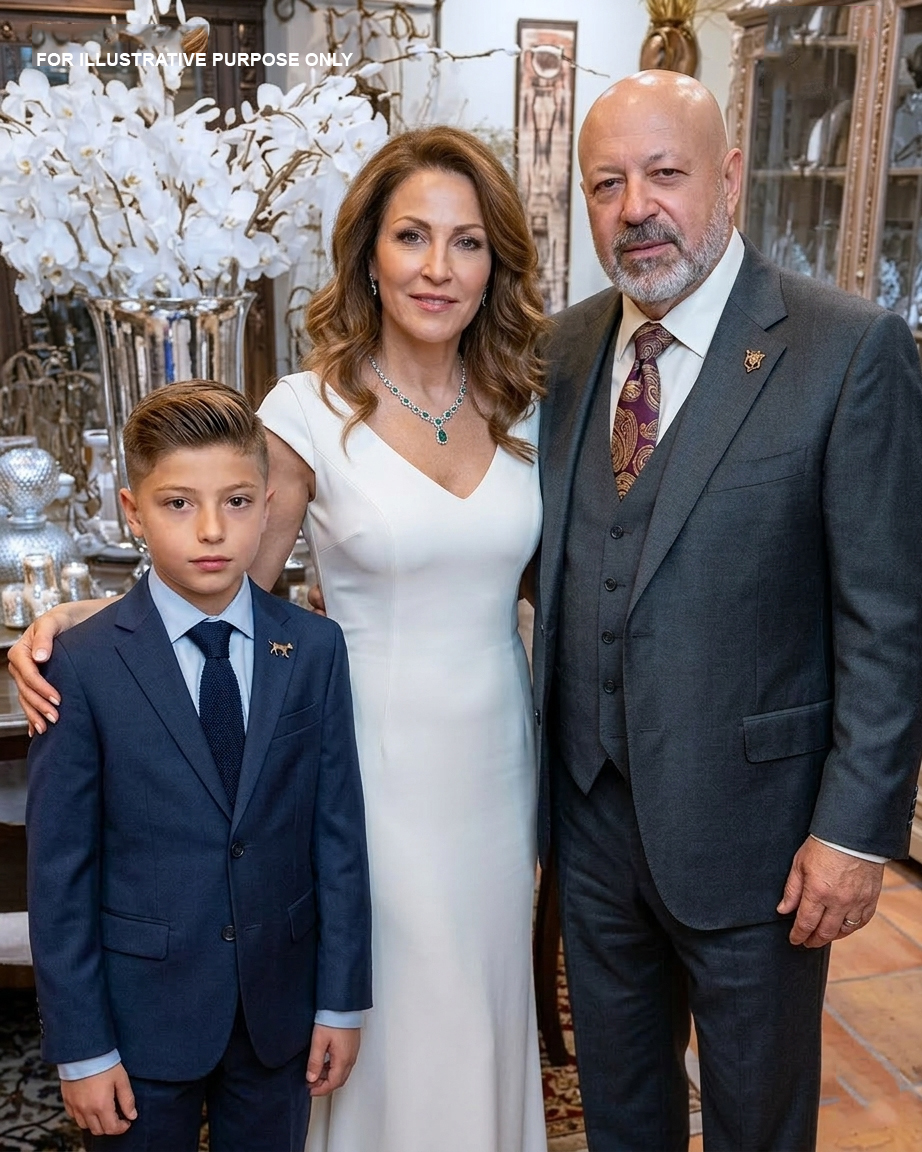
I’m 44 years old, and for most of my life, I believed in a version of happiness that looked effortless from the outside. It was the kind you see in advertisements: a warm kitchen filled with laughter, a husband reaching for your hand, children leaving crayon drawings taped to the refrigerator. I thought that if I followed the right steps, if I loved deeply and tried hard enough, that life would eventually be mine.
Instead, I learned grief in sterile examination rooms that smelled faintly of antiseptic and quiet disappointment.
I had three m1scarriag3s, each one carving out a different hollow space inside me. People tried to comfort me. They said things like, “At least it happened early,” as though the length of time determined the depth of loss. But grief doesn’t measure itself in weeks or months. It settles wherever it wants, and it stays as long as it pleases.
Then came the complications, the hushed conversations between doctors, and finally the word infertility. It was spoken gently but firmly, like a door closing.
My husband didn’t stay long after that. Six months, to be exact. He told me he wanted a family. A real one. I remember staring at him, wondering what I had been all those years, if not exactly that. But I didn’t argue. I didn’t have the energy left to fight for something that already felt broken.
After he left, I unraveled for a while.
Therapy became a weekly ritual. Support groups filled my evenings. I tried to follow every piece of advice people offered. Be gentle with yourself. Give it time. Heal.
Healing, I discovered, isn’t a straight line. It’s a series of small decisions to keep going, even when nothing feels different.
And then, unexpectedly, I met Hector.
He was five years old the first time I saw him. He was sitting at a small plastic table in the corner of a brightly colored room. He had large brown eyes that seemed too watchful for someone his age, and a faint scar on his chin that looked like it had its own story.
He didn’t fidget like the other children. He didn’t try to get anyone’s attention. He simply existed in a quiet, self-contained way that felt less like shyness and more like protection.
His file described him as healthy, with no physical reason for his silence. They called it selective mutism. Two families had already returned him.
“People struggle when a child doesn’t respond verbally,” the caseworker explained to me. “They need that feedback. That connection.”
As if connection only existed through words.
When I sat across from him for the first time, he didn’t speak or smile. He picked up a small toy car and pushed it across the table toward me. I hesitated for a moment, then gently rolled it back.
He paused and looked at me carefully, as if committing my face to memory. Then he rolled the car back again.
That was our first conversation.
I adopted him three months later.
Hector never spoke, but he was never silent in the ways that mattered. He found other ways to communicate, ways that felt more intentional than words ever could be.
When I had difficult days, he would leave drawings near my coffee mug. They were small sketches filled with color and quiet understanding. When I sat on the couch, feeling the weight of everything I had lost, he would come and sit beside me. He stayed close enough that our shoulders touched, grounding me without asking anything in return.
He developed a habit of tapping my wrist twice whenever he wanted to hold my hand. It became our signal, our language. Two gentle taps, and I would lace my fingers through his.
We built a life out of routines and small certainties. Breakfast at seven. Walks in the evening. His stuffed dinosaur always placed carefully on the left side of his pillow. These details, simple as they were, became the foundation of something steady and real.
People often asked me if I loved him like he was my own. I understood what they meant, even if they didn’t say it directly. They were asking if love without biology could ever be complete.
The truth is, I loved Hector with a fierceness that sometimes frightened me. It was the kind of love that makes your chest tighten at the mere thought of anything hurting him. The kind of love that doesn’t need to be spoken to be understood.
For the first time in years, my home didn’t feel like a place haunted by absence. It felt alive.
Then, about a year and a half ago, I met Julian.
He was easy to talk to. He was the kind of person who remembered small details and made you feel seen without trying too hard. When I told him about Hector, he didn’t react with pity or curiosity. He simply accepted it, as though it were the most natural thing in the world.
When he met Hector, he didn’t push him to speak. He brought board games, sat on the floor, and let Hector engage at his own pace.
“It’s okay,” he would say gently. “You don’t have to talk for me to hear you.”
Hector didn’t warm up quickly, but he didn’t pull away either. He watched Julian closely, always observing, always measuring.
I told myself that was just his nature.
When Julian proposed one breezy Sunday afternoon in our backyard, I said yes through tears and laughter that felt like something I had thought I lost forever. For weeks afterward, I moved through life with a lightness I hadn’t felt in years.
We were going to be a family.

The wedding day arrived wrapped in golden autumn light. The venue was a restored barn strung with soft white lights, the kind of place that feels like it belongs in a photograph.
My bridesmaids moved around me in a flurry of excitement. They adjusted my dress, fixed my hair, and made sure everything was perfect.
Hector stood nearby in a neatly pressed suit, holding my bouquet with careful hands. He looked older than his years in that moment. He seemed composed and serious, as if he were carrying something invisible.
I bent down in front of him. “Are you okay, sweetheart?”
He gave me a thumbs-up, but his eyes held something I couldn’t quite name. It wasn’t fear, exactly. It was heavier than that.
“Are you sure?” I asked softly.
He nodded again.
The wedding coordinator peeked into the room. “Two minutes,” she said with a bright, reassuring smile.
I took a deep breath, trying to steady myself.
That’s when Hector grabbed my hand.
Not the usual two taps. This time, his grip was tight and urgent.
I looked down at him, startled. His face had gone pale.
And then, in a clear, steady voice that didn’t feel real, he spoke.
“Mom, I need to tell you something about Julian.”
For a moment, the world seemed to tilt. My mind couldn’t catch up with what I had just heard.
Hector had spoken.
I dropped to my knees in front of him, my dress pooling around me. “What did you say?” I whispered, my voice trembling.
His fingers tightened around mine. “I knew him before you did,” he said. His voice was shaking now. “I didn’t remember at first, but I do now. It’s him.”
A cold weight settled in my chest. “What do you mean?”
His eyes filled with tears, but he didn’t look away. “He was married to my mom after my dad di3d.”
Everything inside me went still.
“I was really little,” Hector continued, his voice uneven, “but I remember things. He used to yell at her all the time. He spent her money. He told her she was crazy.”
Each word landed like a blow.
“At night, I could hear her crying,” he said. “Through the walls.”
My stomach twisted.
“She got sick,” he went on. “Not like cancer. In her head. She was always scared. She couldn’t sleep. She forgot things.”
His voice broke completely. “And he would smile.”
I felt something inside me fracture.
“She di3d,” Hector whispered. “And after that, he just left, like we didn’t matter.”
I cupped his face gently, my hands trembling. “Are you saying that’s why you stopped talking?”
He nodded. “I couldn’t be normal after that. I was too scared. Too broken.”
Tears blurred my vision. “Why didn’t you tell me before?”
“I didn’t recognize him at first,” he said. “He looks different now. But this morning, I heard him laugh. I remember that sound.”
Behind us, a voice cut sharply through the air.
“What’s going on?”
I turned to see Julian standing there. His expression was tight, his eyes flicking between us.
Hector flinched.
Julian stepped forward, his face hardening. “What is he saying?”
Before I could respond, he reached out and grabbed Hector by the back of his jacket.
“Let go of him!” I shouted. My voice was louder than I had ever heard it.
Hector made a small, frightened sound.
“He’s lying,” Julian said quickly. His tone shifted as he glanced around at the watching guests. “He’s confused. You know he has issues.”
I pulled Hector behind me, my body instinctively shielding him. “He doesn’t lie,” I said. My voice was steady despite the chaos inside me. “And you don’t get to touch him.”
Julian’s expression softened abruptly, like a mask slipping into place. “Please,” he said quietly. “We’re about to get married. He’s scared. That’s all this is.”
I turned slightly toward Hector. “Are you sure?” I asked.
He nodded once.
That was enough.
I looked back at Julian. “The wedding is canceled.”
His face darkened. “Don’t do this.”
“I’m not doing anything,” I replied. “I’m listening to my son.”
“If you walk out—”
“Don’t,” I cut him off sharply. “Don’t threaten me.”
Then I did the only thing that made sense. I took Hector’s hand and walked away.
The air outside felt sharp and real against my skin. My dress dragged across the gravel as voices called out behind us, but I didn’t stop. I didn’t turn around.
In the car, I locked the doors. The sound echoed like something final.
Hector curled into himself, his shoulders shaking as the weight of everything he had said finally caught up with him.
I sat there, gripping the steering wheel. My heart was pounding, my mind racing.
Then I started to cry. Not for the wedding, not for the life I had just walked away from, but for the little boy beside me who had carried so much pain in silence.
That night, after he had told me everything he could remember, after he had finally fallen asleep, I began searching.
Records. Names. Dates.
And there it was, exactly as he had said.
A marriage license. An obituary. Details that aligned too perfectly to ignore.
The truth didn’t just surface. It confirmed itself.
When I called Julian the next day to end things, his charm was gone.
“You’re pathetic,” he said coldly. “Believing a damaged kid over me.”
I didn’t respond.
“You should be grateful anyone even wants you,” he added.
I hung up.
My hands were shaking, but my mind felt clearer than it had in years.
That night, I sat beside Hector as he held his stuffed dinosaur tightly against his chest.
“I’m sorry,” he whispered. His voice was small.
I swallowed the ache in my throat. “No,” I said gently. “You did something incredibly brave.”
He looked at me, uncertain.
“You saved me,” I told him. “You saved us.”
He broke down then, and I held him until his breathing steadied.
The wedding never happened. Some people were confused. Some were angry. It didn’t matter.
What mattered was this. After years of silence, my son found his voice, not for himself, but to protect me.
That kind of love changes everything.
I didn’t look for another relationship after that. I didn’t feel incomplete anymore.
Because every day, in the quiet moments of our life together, Hector calls me “Mom.”
And every single time, I answer the same way.
“Yeah, sweetheart. I’m here.”