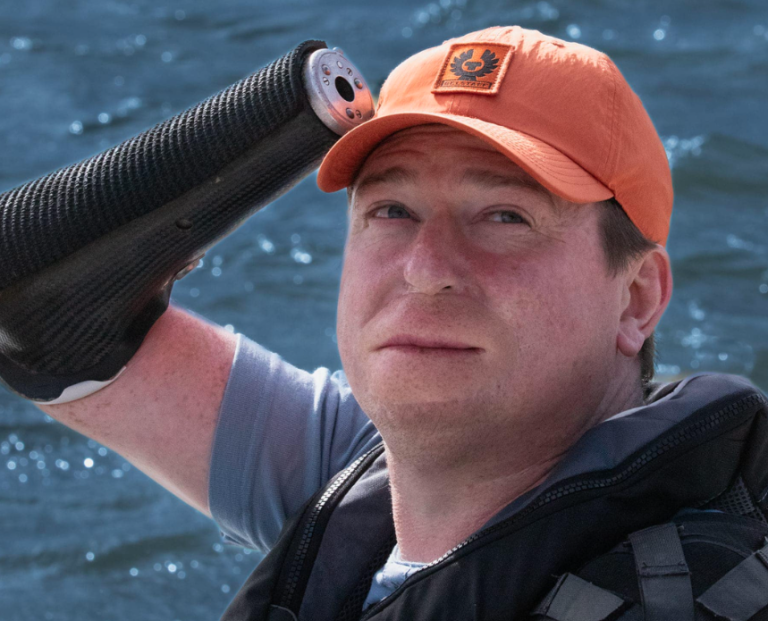
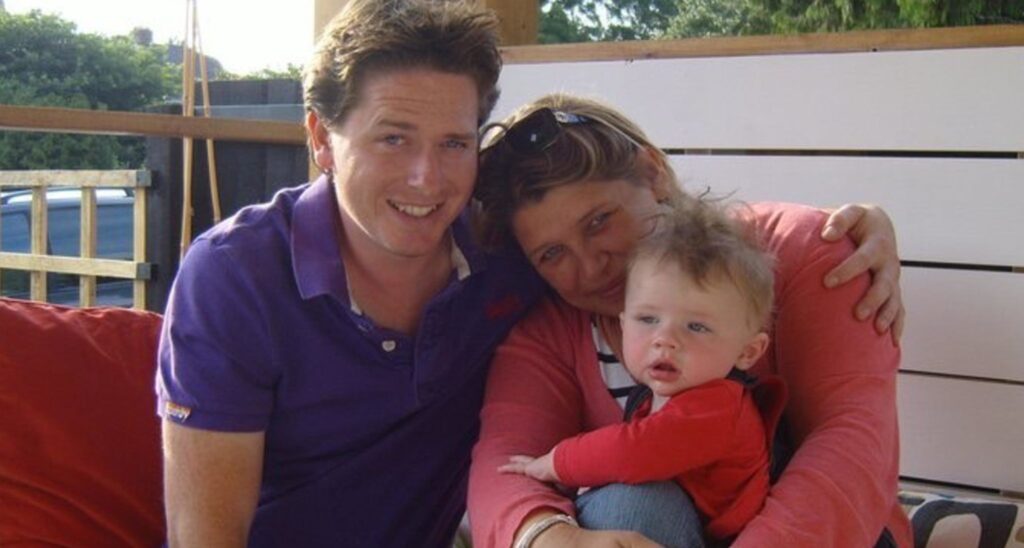
We’ve all been there. You wake up with a scratchy throat, a slight fever, and a heavy head. You call it the “man flu,” joke about it with your spouse, and crawl back under the covers with a bottle of water, expecting to be fine by Monday. In November 2013, Alex Lewis—a 33-year-old pub owner, interior designer, and father of a toddler—did exactly that. But for Alex, Monday never came. Instead, he woke up in a purple-skinned nightmare that would leave him unrecognizable, limb-less, and fighting a 97% chance of death.
As we become increasingly aware of the “silent” threats in our environment, Alex’s story stands as a harrowing, yet profoundly beautiful, testament to human resilience. It is a story of a flesh-eating bug, a “nuclear” facial reconstruction, and a man who lost his arms and legs only to find a life he never knew he was missing. The incredible survival of Alex Lewis, the “little-known” science of Sepsis, and the “Nana Rule” for why the most broken things can often hold the most light.
1. From “Man Flu” to Toxic Shock: The Rapid Descent
The speed at which Alex’s body turned against itself is the most terrifying part of his story.
The Common Cold Mask: Alex and his two-year-old son, Sam, both fell ill. It seemed like a standard seasonal bug. But while Sam bounced back, Alex began passing blood and his skin turned a haunting shade of purple.
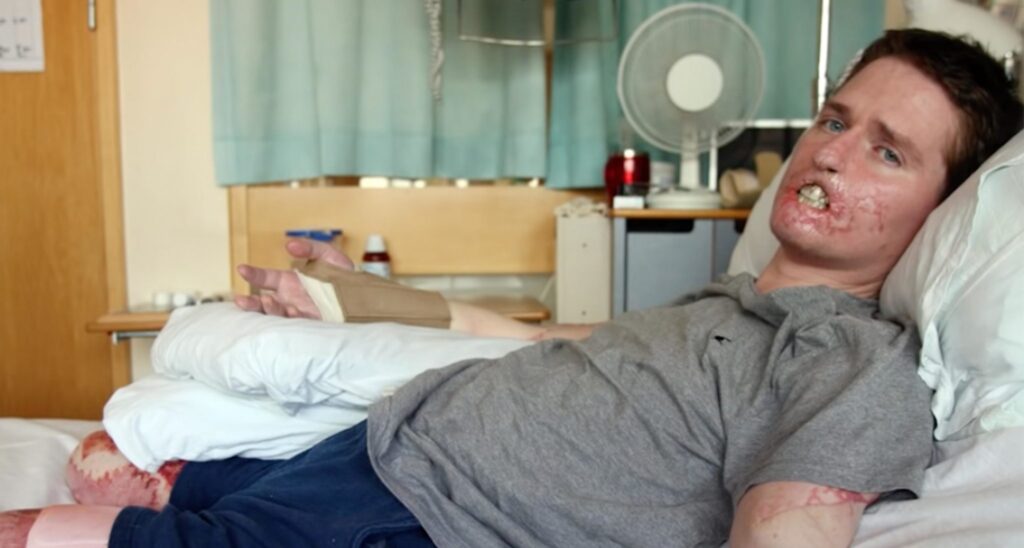
The Sepsis Explosion: Alex had contracted Streptococcal Infection (Group A). This triggered Sepsis—a condition where the body’s immune system goes into overdrive to fight an infection, accidentally destroying its own tissues and organs in the process.
The 3% Survival Rate: Within hours of arriving at the hospital, his kidneys shut down. Doctors told his wife, Lucy, to say her final goodbyes. He was in the grip of toxic shock syndrome, septicemia, and necrotizing fasciitis—the “flesh-eating” bug.
2. The Brutal Price of Survival: Amputations and “The Bag”
To save Alex’s life, the “infected” parts had to go. But the infection had spread with a “little-known” ferocity.
The Creeping Blackness: Alex recalls seeing his legs turn blacker and blacker, the necrosis creeping up toward his waist like a shadow. To stop the poison, doctors had to amputate all four limbs.
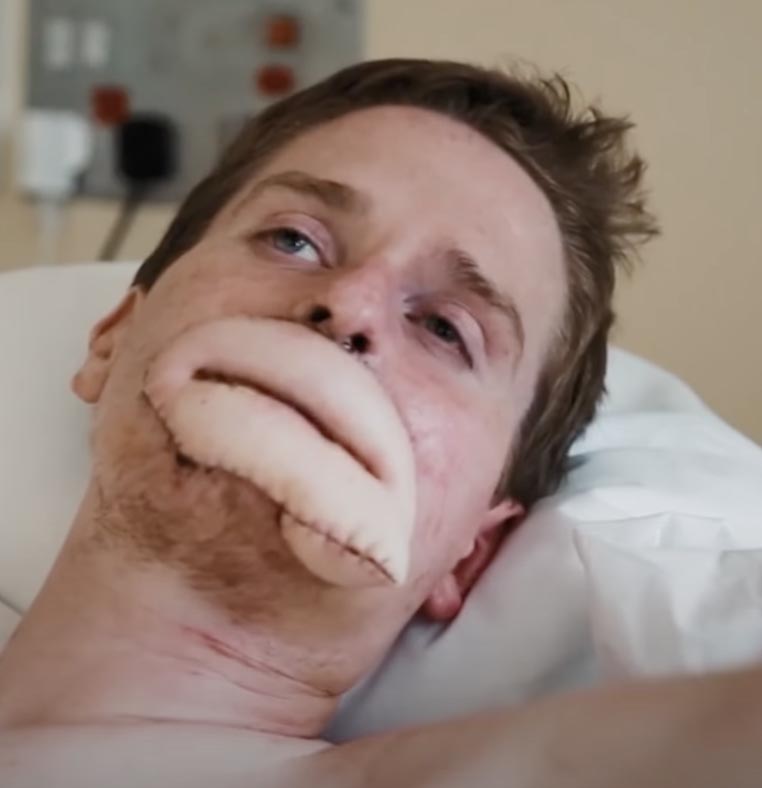
A World First in Surgery: The infection didn’t stop at his limbs; it claimed his lips and parts of his nose. Plastic surgeon Alexandra Crick performed a “world-first” operation, using a single piece of skin from Alex’s shoulder to reconstruct both his top and bottom lips at once.
The “Power Ranger” Transformation: For a two-year-old, seeing a father go from a healthy man to an unrecognizable patient in bandages is traumatic. Lucy told Sam that Alex was becoming a “Red Power Ranger”—a hero who was getting his parts replaced with “cool” new tech. This simple narrative allowed a toddler to process a tragedy without the fear.
3. Relearning the World: The One-Elbow Independence
We talk a lot about “independence,” but for Alex, independence was measured in millimeters.
The Golden Elbow: Surgeons managed to save Alex’s right arm just at the elbow. This small joint became his “whole independence.” With it, he could eventually self-propel a wheelchair and use prosthetic pincers to eat.
The Facial “Reset”: The surgery on his lips was a miracle. Despite the “brutal” recovery, Alex regained the ability to speak clearly—a vital tool for the motivational speaking career that awaited him.
The EMS Breakthrough: Alex began using EMS (Electro Muscle Stimulation) training. This technology is a “little-known” secret for amputees, allowing them to engage and “feel” muscles that haven’t been used in years, providing a confidence boost that standard physical therapy can’t match.
4. The Best Year of His Life: Scaling Mountains Without Limbs
Most people would look at Alex’s story and see a tragedy. Alex looks at it and sees a “reboot.”
The Ethiopia Mission: Alex co-founded the Wild Wheelchairs Project, raising money to build a wheelchair manufacturing facility in Ethiopia. He didn’t just send a check; he went there.
Scaling Ras Dashen: In 2019, Alex climbed the highest mountain in Ethiopia using a specially-adapted buggy, climbing the final 300 meters to the summit himself. He proved that “disability” is a perspective, not a destination.
The New Fatherhood: Today, Sam doesn’t see a “disabled” dad; he sees a resilient one who brings home “cool equipment.” Alex says he has “lived more in the last four years than the previous 33.” He doesn’t regret the infection because it forced him to stop “missing” the life he was already living.
5. Nana’s Wisdom: “The Spirit Doesn’t Need Fingers to Hold On”
Nana lived through a time when people “gave up” much more easily, but she always had a soft spot for the ones who fought back.
She used to tell us, “You’re all upset because you’ve lost a button or a dime, but you look at a man like Alex and you realize that a house is still a house even if the porch is gone. Your life isn’t your legs, and your soul isn’t your skin. If you’ve still got a heart that beats and a family that loves you, you’ve got everything you need to build a new castle. You stop crying over what the bug took and start thanking God for what the bug couldn’t touch—his will. A man who can laugh without lips is a man who’s found the real secret to joy.” She believed that Alex’s “Red Power Ranger” story was the truth of the world.
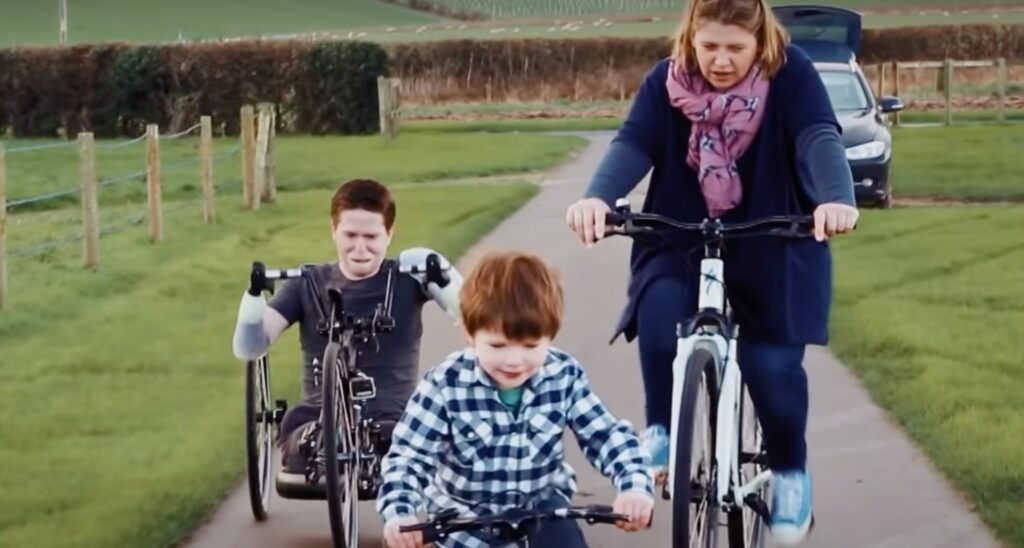
She’d see a photo of Alex and Sam and say, “Look at that boy’s face. He doesn’t see a ‘cripple’; he sees his hero. You don’t need arms to hug your child if your spirit is wide enough. Alex Lewis didn’t lose his life; he just had the clutter cleared away so he could see how much he loved his wife and son. You stop worrying about ‘ideal settings’ and start making the most of the setting you’re in. If a man can climb a mountain with no feet, you can certainly finish the dishes.” Nana had a rule: The “Grit” Rule. She’d say, “If you’re still breathing, you’re still winning. The rest is just details.” Nana knew that in 2026, the real “3% miracle” was just the refusal to say “goodbye.”
The Takeaway: Appreciate the “Little” Troubles
Alex Lewis is living proof that “nothing is impossible” isn’t just a cliché on a poster—it’s a lived reality. Every time we complain about a cold coffee or a late bus, we are forgetting the “3% chance” that we are all lucky to be here.
Let’s take a page from the Alex Lewis playbook. Let’s stop mourning what we’ve lost and start celebrating the “Power Ranger” within us all.
What’s the “little” trouble in your life today that feels a lot smaller after reading Alex’s story? Have you ever had a “reboot” moment that changed your perspective on what truly matters?