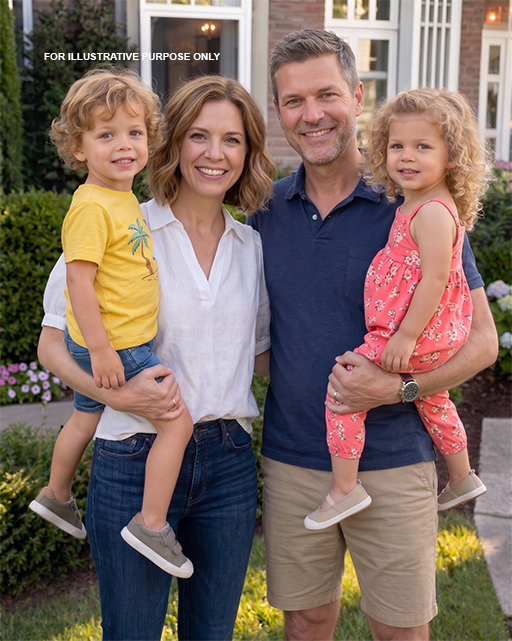
The first time my husband mentioned adoption, we were folding laundry on a rainy Saturday afternoon.
The television hummed softly in the background while rain traced slow lines down the kitchen windows. I sat at the table, matching socks and trying not to think about the spare bedroom upstairs that had once been painted pale yellow before we turned it into storage after our second miscarriage.
“Have you ever thought about adopting?” David asked quietly.
I looked up. “Recently or in general?”
“Either.”
The question settled carefully between us.
For years, conversations about children had been dangerous territory. Fertility treatments. Failed procedures. Hormone injections. Pregnancies that ended before we could even allow ourselves excitement.
Eventually, we stopped trying.
Not through some dramatic conversation.
Just slowly.
Like two exhausted people lowering something too heavy to keep carrying.
By the time I turned thirty-nine, I had convinced myself I could survive without motherhood. The grief never disappeared entirely, but it became quieter. Easier to place in the background of daily life.
David, however, never seemed fully at peace with it.
“I saw an article online,” he said. “About siblings in foster care.”
I smiled faintly. “You hate online articles.”
“Most of them.”
He folded another towel carefully.
“What kind of siblings?”
“A little boy and girl.”
I shrugged lightly, trying to ignore the familiar ache in my chest. “There are thousands of children who need homes.”
“I know.”
Something tense lingered in his expression.
Then he said softly, “Maybe we still have room for that.”
Over the next several months, adoption became a recurring conversation.
Never forceful.
Never enough to start an argument.
But enough that I knew it mattered deeply to him.
At first, I resisted.
Not because I didn’t want children. Part of me probably always would.
But I was tired of rebuilding hope around uncertainty.
“We finally have stability,” I told him one evening after dinner. “What if we’re too old to start over?”
“We’re not old.”
“We’re comfortable now.”
David studied me quietly.
“Comfortable and happy aren’t always the same thing.”
That sentence stayed with me.
A few weeks later, I agreed to attend an informational meeting at an adoption agency.
Then another.
Then interviews.
Financial reviews.
Parenting evaluations.
Home inspections.
The process was emotionally exhausting. Social workers asked deeply personal questions about our marriage, our losses, our communication, and our childhoods.
Sometimes I left meetings feeling emotionally scraped raw.
But somewhere during those months, something inside me softened again.
One afternoon, during our final home study interview, the agency director asked what kind of placement we were open to.
Before I could answer, David said quietly, “We’d prefer siblings if possible.”
I noticed how quickly he answered.
At the time, I thought it was compassion.
Later, I understood it was guilt.
Three months into the process, the agency introduced us to 4-year-old twins named Lila and Mason.
The social worker explained that their mother had died from an overdose eight months earlier. The twins had been moved through temporary foster placements since then, while the state searched unsuccessfully for a stable family placement.
“They’re deeply attached,” the social worker explained gently. “Separating them would be traumatic.”
Our first meeting took place in a supervised playroom.
Mason barely spoke.
He sat on the floor, clutching a plastic dinosaur while watching us cautiously from beneath dark curls.
Lila observed everything with startling intensity.
Not shy exactly.
Alert.
Like a child who had learned adults could become unpredictable without warning.
When I handed her apple juice, she glanced toward the social worker before taking it.
“Can we keep the cups after?” she asked quietly.
My chest tightened painfully.
“Yes,” I said immediately. “Of course.”
David became emotional the moment he met them.
Especially Mason.
He sat on the floor building block towers with him while Lila colored nearby. At one point, I caught him staring at both children with an expression I couldn’t understand then.
Now I know it was recognition.
Not because they resembled him physically.
But because he already knew exactly who they were.
The placement process continued for several more months.
Nothing about it was simple.
There were court reviews, legal clearances, parenting classes, medical evaluations, and repeated agency interviews. Because the twins’ mother and David had been separated through foster care as children, processed under different surnames in different states, and never legally reunited as siblings afterward, the state records connecting them were fragmented and incomplete.
Melissa, the twins’ mother, had also never listed David in any official paperwork after they reconnected years later. By then, she feared state involvement constantly because of her addiction and instability.
So the agency never connected David to the children biologically.
Only David and a woman named Vanessa knew the truth.
Vanessa was Melissa’s older half-sister.
After Melissa di3d, Vanessa initially tried obtaining kinship placement herself, but her husband’s declining health and severe financial problems caused the evaluation to fail.
So the twins entered the standard foster-adoption system instead.
And David stayed silent.
The twins moved into our home in October.
At first, everything felt fragile.
Mason cried quietly at bedtime for nearly two weeks.
Lila hid crackers and fruit snacks beneath her mattress.
Neither child liked closed bedroom doors at night.
But slowly, routines formed.
Morning cartoons before preschool.
Bath toys are scattered across the tub.
Tiny shoes were abandoned throughout the house.
The silence that had once filled our home disappeared completely.
And so did some guarded part of me I hadn’t realized still existed.
I started memorizing their habits without trying. Mason hated peas but loved strawberries. Lila needed the hallway light on to sleep. Mason preferred dinosaur books. Lila liked stories about animals.
Three weeks after they moved in, Mason fell asleep against my shoulder while I read bedtime stories.
A month later, Lila crawled into my lap voluntarily for the first time.
By Christmas, they were calling me Mom accidentally every few days before catching themselves nervously afterward.
Each time, my heart broke a little.
Then slowly healed again.
Nearly three months after the twins moved in, everything shattered.
I left work early one Tuesday because of a migraine.
The house was unusually quiet when I walked inside.
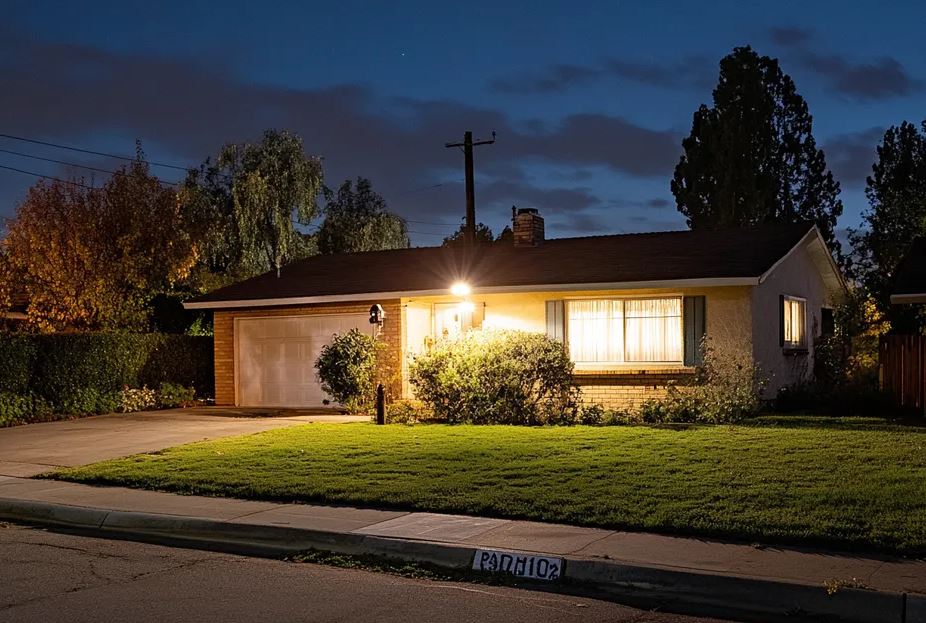
Then I heard voices in the living room.
David’s voice.
And a woman’s.
“She deserves to know,” the woman whispered.
“I know.”
“You should’ve told her before they moved in permanently.”
“I was trying to protect everyone.”
“No,” the woman replied softly. “You were trying to protect yourself.”
A cold feeling spread through my stomach.
I moved quietly toward the hallway.
The woman sitting on our couch looked exhausted, with blonde hair loosely pinned back and dark circles beneath her eyes.
David looked pale the moment he saw me.
“What’s going on?” I asked.
Silence.
The woman stood awkwardly. “I should leave.”
“No,” I said sharply. “Nobody’s leaving until someone explains this.”
David rubbed both hands over his face.
Finally, he whispered, “This is Vanessa.”
The woman nodded once.
“And?”
Neither answered immediately.
My pulse hammered harder.
Then Vanessa spoke quietly.
“I’m the twins’ biological aunt.”
The room seemed to tilt.
I stared at her.
Then at David.
Nothing made sense.
“You knew them before the adoption?”
David closed his eyes briefly.
“Yes.”
“How?”
Silence stretched painfully.
Then Vanessa answered for him.
“Because their mother was David’s sister.”
For several seconds, I genuinely couldn’t process the words.
“Sister?”
David looked shattered.
“I found her years ago.”
“You told me you had no family.”
“I thought I didn’t for a long time.”
The anger arrived instantly.
Violently.
“You lied to me for eleven years?”
“She disappeared constantly,” he said quickly. “When we were children, we were separated into different foster systems. Different names. Different states. I spent years believing she was d3ad.”
“But you found her.”
“Yes.”
“When?”
“About eight years ago.”
Eight years.
Eight years of secrets.
“She was already addicted by then,” he continued quietly. “Sometimes she vanished for months. Sometimes longer.”
“You still hid her from me.”
“I was ashamed.”
“Of what?”
“My childhood. My family. Her addiction. All of it.”
Vanessa spoke softly. “He tried helping Melissa for years.”
I barely heard her.
Every conversation about adoption replayed differently now.
Every carefully timed discussion.
Every emotional argument.
“You pushed me into adopting them knowing exactly who they were.”
“I never planned any of this,” David said immediately. “When Melissa di3d, Vanessa called me because there was nobody else.”
“And instead of telling me the truth, you manipulated me.”
Pain crossed his face instantly.
“I was terrified.”
“That doesn’t excuse this.”
“I know.”
“You let me build my life around a lie!”
My voice cracked so sharply the room fell silent afterward.
“You let me become their mother without giving me the truth.”
His eyes filled suddenly.
“You once told me you couldn’t survive another emotionally complicated loss,” he whispered. “After everything with infertility, after the miscarriages… I kept hearing that in my head. I thought if I told you the truth immediately, you’d say no because it would feel too overwhelming.”
“You decided that for me.”
“Yes.”
The honesty somehow hurt worse than the excuses would have.
“I couldn’t lose them,” he whispered.
That sentence silenced the room.
Not because it justified anything.
But because beneath the betrayal was something terrified and painfully human.
A man who had grown up abandoned.
A man convinced family could disappear overnight.
A man who panicked when the only blood relatives he had left were suddenly at risk of entering the same system that destroyed his own childhood.
I left the house an hour later because I couldn’t breathe inside it anymore.
I drove aimlessly for nearly two hours.
I cried in a pharmacy parking lot.
I screamed once inside the car hard enough to hurt my throat afterward.
Mostly, though, I thought about the twins.
About Mason finally laughing freely during bath time the night before.
About Lila asleep against my chest during movie night.
Children who had already lost one mother.
Children who finally believed they were safe.
When I returned home after dark, the twins were asleep upstairs.
David sat alone at the kitchen table.
He looked exhausted.
“I’m sorry,” he whispered immediately.
I stood across from him silently.
“You have every right to hate me.”
“I don’t even know what I feel.”
“That’s fair.”
I looked toward the staircase.
“Do they know?”
“No.”
“Does Lila remember her mother?”
“A little,” he admitted quietly. “More than Mason does.”
I sat down slowly.
“You should’ve trusted me.”
“I know.”
“No,” I said softly, tears rising again, “I really don’t think you do.”
For the first time since I met him, David looked completely broken.
Not defensive.
Not angry.
Destroyed.
“She made me promise,” he whispered.
“Who?”
“Melissa.”
His voice trembled.
“The last time I saw her alive, she begged me not to let the twins get separated in foster care. She knew she was spiraling. She knew she might di3.”
He swallowed hard.
“I promised her I’d protect them.”
Over the next several months, our marriage entered the hardest period we had ever faced.
I moved temporarily into the guest room.
There were real arguments after the twins fell asleep.
Painful conversations that lasted until two in the morning.
“You stole my choice,” I told him once.
“I know.”
“You built our family on dishonesty.”
“I know.”
Sometimes his acceptance of blame made me even angrier.
I met with a lawyer one afternoon because I genuinely considered separation.
Not because I stopped loving the twins.
But because I no longer recognized my marriage.
Meanwhile, Vanessa slowly became part of our lives again.
She visited once or twice a month to see the twins. At first, I resented every visit, though not because of her personally. She simply represented a truth I was still struggling to live with.
Lila remembered her vaguely.
Mason barely did.
One evening, while I folded laundry in the living room, Lila climbed beside me quietly.
“You sad?” she asked.
“A little.”
She twisted her sleeve nervously.
“You’re not taking us back, right?”
My heart nearly stopped.
Not because of the words themselves.
Because she asked them so casually.
Like adults, leaving was something she already expected from life.
I pulled her into my arms immediately.
“No,” I whispered fiercely. “Nobody’s taking you anywhere.”
That night, I found David sitting alone on the back porch.
The winter air was painfully cold.
“She asked if we were sending them away,” I said quietly.
Pain crossed his face instantly.
“I never wanted them caught in this.”
“But they are.”
He nodded silently.
For several minutes, neither of us spoke.
Then I asked quietly, “Why didn’t you tell me after they moved in?”
He stared into the darkness.
“Because every day you loved them more.”
The honesty of that answer hurt worse than lies.
Months passed.
Not weeks.
Months.
David started therapy individually. Eventually, we began marriage counseling together.
Slowly, painfully, I learned more about his childhood than I had during our entire marriage.
The foster homes.
The hunger.
The instability.
The shame.
The guilt surrounding Melissa.
He admitted he had spent years burying entire parts of himself because hiding things had once been necessary for survival.
That explanation didn’t erase the betrayal.
But it made it understandable.
And understanding changes things.
By spring, trust still wasn’t fully repaired.
Sometimes I still caught myself wondering whether there were more secrets hidden somewhere.
Sometimes, David noticed my hesitation and looked quietly devastated by it.
But now, instead of burying fear, we talked about it honestly.
One Saturday morning in April, I stood near the kitchen window watching Mason wobble down the driveway on a tiny bicycle while David jogged beside him.
Lila sat nearby, drawing flowers with sidewalk chalk.
Mason crashed dramatically into the grass and burst into laughter.
Real laughter.
Carefree laughter.
The kind children make only when they finally feel safe.
A few minutes later, Lila ran toward me, proudly holding up her drawing.
“It’s us,” she announced.
I looked down.
Four crooked figures holding hands beneath a bright blue sky.
A family.
Messy.
Complicated.
Built partly from grief and fear and mistakes and second chances.
But real.
Completely real.
And standing there in the warm spring sunlight, listening to children laughing in our yard, I realized something that frightened me almost as much as the betrayal itself.
Despite everything that had happened, I could no longer imagine my life without them.
Or without him.
Maybe trust can be rebuilt slowly, one honest day at a time.
But for the first time in months, I finally believed we were rebuilding it together.