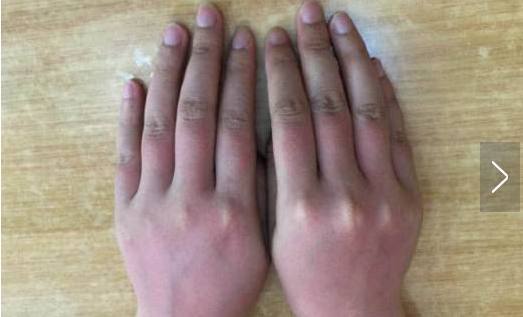
You’re bringing in the groceries on a crisp autumn day, or perhaps you’re just sitting reading a book, when you glance down at your hands. Your fingertips, or maybe even a whole finger or two, have taken on a dusky, purple hue. It’s not from the cold, and you didn’t slam them in a car door. There’s no obvious reason. You wiggle them, rub them together, and slowly, the color returns to a normal pink. It’s bizarre, a little unsettling, and it feels like your body is playing a strange visual trick on you.
This phenomenon isn’t a magic trick; it’s a vivid, real-time bulletin from your circulatory system. When your fingertips turn purple for no apparent reason, your blood circulation isn’t just being sluggish—it’s often staging a dramatic, small-scale rebellion. It’s a condition called Raynaud’s phenomenon (or Raynaud’s disease), and it’s your body’s capillaries throwing a tantrum.
The Great Capillary Clampdown: A Traffic Jam in Your Fingers
To understand Raynaud’s, think of the network of tiny blood vessels in your extremities—your fingers and toes—as a vast system of flexible, microscopic roads. Normally, these roads are open, allowing a steady flow of warm, oxygen-rich blood to reach your fingertips, giving them their healthy pink color.
In a person with Raynaud’s, the muscles in the walls of these smallest arteries (arterioles) are hypersensitive. They overreact to certain triggers, most commonly cold temperatures or emotional stress. It’s as if a tiny, panicked traffic controller in each finger suddenly slams the gates shut.
This process happens in three distinct, colorful phases:
- White (Pallor): The arteries constrict violently, cutting off blood supply almost completely. The finger turns stark white and often feels cold and numb.
- Blue/Purple (Cyanosis): With the blood flow blocked, the blood already trapped in the tiny veins of the fingertip begins to lose its oxygen. Deoxygenated blood is a darker, bluish-purple color. This is the phase that usually causes the most alarm.
- Red (Rubor): Finally, the arteries reopen, either as they warm up or as the stress passes. A rush of blood floods back into the tissue, often causing a throbbing, painful, or tingling sensation and turning the fingers bright red.
For some, the classic “white, blue, red” sequence is textbook. For many others, they might only notice the dramatic purple phase, especially if they catch it midway through.
Primary vs. Secondary: The “Why” Behind the Purple
Raynaud’s itself is a symptom, not a disease. Doctors categorize it in two ways:
- Primary Raynaud’s (Raynaud’s Disease): This is the most common form. It’s a quirky, standalone condition where the blood vessels are just overly enthusiastic about constricting. It’s often more of a nuisance than a serious health threat. It typically affects both hands symmetrically, and the first attack usually happens in a person’s teens or 20s/30s.
- Secondary Raynaud’s (Raynaud’s Phenomenon): This is the more serious form, where the purple fingers are a clue to an underlying autoimmune or connective tissue disease. This is especially important for adults who develop these symptoms for the first time in their 40s, 50s, or beyond. Here, Raynaud’s is often one of the earliest signals of conditions like:
- Scleroderma: A disease that causes hardening and tightening of the skin and connective tissues.
- Lupus (SLE): A systemic autoimmune disease.
- Rheumatoid Arthritis.
- Sjögren’s syndrome.
In Secondary Raynaud’s, the blood vessel spasms are caused by damage or inflammation related to the larger disease process. It can be more severe, sometimes leading to painful sores or tissue damage if circulation is cut off for too long.
The Midlife Connection: Why Now?
If you’re noticing this for the first time in midlife, it’s particularly wise to pay attention. While Primary Raynaud’s can persist for decades, the new onset of significant Raynaud’s symptoms in an older adult is a red flag that often prompts doctors to investigate for secondary causes. Furthermore, our circulation naturally becomes less robust with age, and medications common in this stage of life (like some beta-blockers for blood pressure, certain migraine drugs, or even over-the-counter decongestants) can trigger or worsen Raynaud’s attacks.
What You Can Do: From Immediate Relief to Medical Insight
- Keep a “Purple Finger” Diary: Note when it happens. What was the temperature? Were you stressed? Had you just handled something cold from the freezer? This information is gold for your doctor.
- Become a Master of Warmth: Your first line of defense is to avoid the trigger. Wear gloves before you go out into the cold, not after your hands are already chilled. Use insulated gloves for handling frozen foods. Consider battery-heated gloves or gloves with chemical warmers for prolonged cold exposure.
- Quit Smoking, Without Question: Nicotine is a powerful vasoconstrictor—it directly causes blood vessels to clamp down. It is public enemy number one for Raynaud’s.
- Manage Stress: Since stress is a trigger, practices like deep breathing, meditation, or gentle yoga can help keep your nervous system—and thus your blood vessels—calmer.
- See Your Doctor—and Possibly a Rheumatologist: This is the critical step. Describe your symptoms in detail and show them photos if you can capture the color change. Your doctor will likely examine your fingers, check the capillaries at your nail folds with a small magnifier, and may order blood tests to look for markers of autoimmune diseases (like an ANA test).
Treatments can range from simple lifestyle adjustments to prescription medications called calcium channel blockers that help relax and open up the small blood vessels.
Those inexplicably purple fingertips are a powerful, visual signal. They’re not just a curious discoloration; they’re a live feed from your micro-circulation. By understanding this, you can move from worry to proactive management. You can learn to negotiate with your overzealous capillaries, keep them warm and calm, and ensure that the only thing turning purple in your life is a beautiful evening sky—not your own hands.