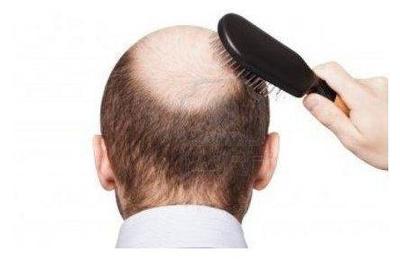
You’re in the shower, and when you rinse the conditioner from your hair, a tangled, alarming mass the size of a small mouse is circling the drain. Or perhaps it’s your hairbrush that tells the story each morning, so clogged it looks like it’s growing a small, sad animal of its own. This isn’t the gradual, slow thinning you might have expected with age. This is a sudden, shocking exodus.
It’s terrifying. Your mind might race to stress, a new shampoo, or even something more serious. But before you panic and order every “miracle growth” serum on the internet, let’s talk about a hidden conductor of your body’s entire metabolic orchestra: your thyroid gland. When your hair falls out in clumps, your thyroid isn’t just a suspect; it’s often the prime culprit.
The Thyroid: The Body’s Thermostat and Metronome
Tucked in the front of your neck, just below your Adam’s apple, this small, butterfly-shaped gland has an enormous job. Think of it as your body’s master control center. It produces hormones—primarily Thyroxine (T4) and Triiodothyronine (T3)—that set the pace for nearly every function in your body.
These hormones dictate the speed of your metabolism. They regulate your body temperature, your heart rate, your energy levels, and even how quickly you burn calories. Most critically for our story, they dictate the speed of your hair growth cycle.
Your hair doesn’t grow continuously. Each follicle goes through a predictable cycle:
- Anagen (Growth Phase): This is the active period, lasting for years.
- Catagen (Transition Phase): A brief, transitional period where growth stops.
- Telogen (Resting Phase): The follicle rests for a few months before the hair is shed, and the cycle begins anew.
Normally, about 85-90% of your hair is in the growth phase at any given time, with only a small percentage shedding daily. Your thyroid hormone is the gentle hand that guides this delicate process, keeping the vast majority of your hair follicles happily in the “grow” phase.
When the Conductor Loses the Beat: The Great Shed
Now, imagine what happens when the thyroid gland goes haywire. It can malfunction in two primary directions, and both lead to hair loss.
- Hypothyroidism (Underactive Thyroid): This is when the gland is sluggish and doesn’t produce enough hormones. It’s like the conductor has fallen asleep. The entire body’s metabolism slows to a crawl. Body functions downshift. And the hair growth cycle is hit hard. With insufficient thyroid hormone, a massive number of hair follicles are prematurely pushed from the growing (anagen) phase into the resting (telogen) phase. They all go dormant at once.
- Hyperthyroidism (Overactive Thyroid): This is the opposite problem. The gland is in overdrive, pumping out too much hormone. Now the conductor is frantic, whipping the orchestra into a frenzied, unsustainable tempo. This metabolic overload can also shock the hair follicles, disrupting their cycle and leading to widespread shedding.
In both cases, the result is the same: a condition called Telogen Effluvium. It’s not that the follicles are dead; they’ve just been simultaneously sent into a hibernation state. The key point is this: there’s a delay between the thyroid dysfunction starting and the hair actually falling out. It can take two to three months after the thyroid imbalance begins for you to notice the dramatic shedding. This is why it often feels so sudden and unexplained—the trigger happened months ago.
The Telltale Signs: It’s Not Just Your Scalp
While the handfuls of hair in the shower are the most dramatic symptom, a thyroid issue rarely sends just one signal. It’s a full-body announcement. Look for these other clues:
For Hypothyroidism (Underactive):
- Crushing fatigue and lack of energy
- Unexplained weight gain
- Feeling cold all the time
- Dry, pale skin and brittle nails
- Brain fog, forgetfulness, and depression
- Constipation
For Hyperthyroidism (Overactive):
- Anxiety, nervousness, and irritability
- Rapid heartbeat or palpitations
- Unexplained weight loss (despite a good appetite)
- Insomnia
- Excessive sweating and heat intolerance
- Tremors in your hands
The Good News: This is Often Reversible
This is the most important part of the story: thyroid-related hair loss is almost always temporary. Unlike genetic pattern baldness, the follicles are not permanently damaged. They are simply stunned. Once the underlying thyroid condition is diagnosed and properly treated, the hair growth cycle can reset itself.
The path forward is clear:
- See Your Doctor. This is non-negotiable. Describe all your symptoms, not just the hair loss. Mention the fatigue, the temperature changes, the mood shifts.
- Get a Simple Blood Test. Diagnosing a thyroid disorder is straightforward. A simple TSH (Thyroid-Stimulating Hormone) blood test is the gold standard and can quickly confirm if your thyroid is underactive or overactive.
- Commit to Treatment. Treatment is typically very effective. For hypothyroidism, it’s usually a daily synthetic thyroid hormone pill (levothyroxine). For hyperthyroidism, options include medication, radioactive iodine, or sometimes surgery. It’s about re-calibrating the system.
The hair won’t grow back overnight. After starting treatment, the excessive shedding should stop within a few months. Then, you’ll begin to see fine, new “baby hairs” sprouting along your hairline and part. It can take six months to a year for your hair to fully return to its previous volume, but the journey back has begun.
So, that terrifying clump of hair in the drain? See it not as a symbol of loss, but as a powerful, visible message from your body. It’s a signal that a key part of your internal machinery needs a tune-up. By listening to that signal, you can find the answer, restore your balance, and welcome back the healthy head of hair that is waiting to return.