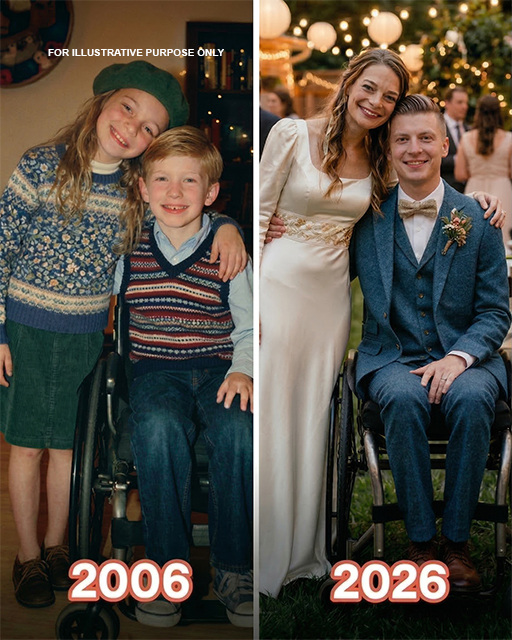
My name is Meryl, and for most of my life, I felt like I belonged nowhere.
By the time I turned 8, I had already lived in so many foster homes that the memories blurred together. I remember different kitchens, different beds, and different rules about what I could touch and when I had to be quiet. I remember different adults leaning down to smile politely while reminding me that I was only there “for a little while.”
At some point, I stopped believing in the phrase forever home.
Adults often said things like, “Everything happens for a reason,” or, “This placement will be better.” After enough moves, though, you realize those words are just decorations people use to soften disappointment.
When you are moved often enough, you stop unpacking.
You keep your important things in one bag. You memorize how to stay out of the way. You learn not to cry when a social worker says, with forced cheerfulness, “This family seems really excited to meet you.”
Excitement never lasted.
By the time I was sent to Willow Creek Children’s Home, I had already made one rule for myself.
Don’t get attached to anyone.
The staff called Willow Creek a long-term residential facility. It sounded official and hopeful, but everyone inside knew what it really meant. It was where children went when the adoption system quietly gave up on them. Older kids. Kids with behavioral notes in their files. Kids who had been moved too many times.
Kids like me.
I arrived with a small duffel bag and a permanent knot in my chest.
That was where I met James.
He was nine years old when I first saw him. Thin and pale, with messy brown hair that refused to stay flat no matter how much he tried to smooth it. His wheelchair was parked near the big front window in the recreation room.
While the other kids ran around or shouted over board games, James sat quietly, watching the yard outside as if it were a movie playing just for him.
The adults treated him differently.
Some spoke too loudly, as if he could not hear them. Others spoke too gently, as though he were fragile glass that might shatter if addressed normally. A few avoided speaking to him altogether.
The other kids were not cruel. They simply did not know how to include him.
They would wave from across the room, then run outside to play games he could not join.
One afternoon during free time, I dropped onto the carpet near the big window with a worn library book. James was already there, staring outside.
Without looking up, I said, “If you’re guarding the window, you should at least share the view.”
He turned his head slowly and studied me with quiet curiosity.
“You’re new,” he said.
“Not exactly,” I replied. “More like recycled.”
One corner of his mouth lifted slightly.
“I’m Meryl,” I added.
He nodded once.
“James.”
That was it.
That was the beginning.
Growing up in the same orphanage means you see every version of a person.
James and I saw each other angry, exhausted, hopeful, and pretending not to care whenever prospective adoptive parents walked through the halls. We knew exactly what those couples were looking for.
Younger children.
Children who smiled easily.
Children without complicated medical files or emotional histories.
Not the girl labeled “multiple failed placements.”
And certainly not the quiet boy in a wheelchair who observed everything before speaking.
Whenever one of the younger kids got adopted, the rest of us gathered near the front door to watch them leave with their new families. They carried their belongings in black trash bags provided by the staff.
It was a tradition no one ever talked about.
Afterward, James and I would perform the same ritual.
“If you get adopted,” he would say, spinning one wheel casually, “I’m taking your books.”
“If you get adopted,” I would reply, “I’m stealing your hoodie.”
We always said it like a joke.
But neither of us really believed it would happen.
Eventually, we stopped waiting for families who never came.
Instead, we chose each other.
When we turned eighteen, the system did not celebrate.
There was no party. No farewell dinner.
We were called into an office where a tired administrator slid paperwork across a scratched desk.
“Sign here,” she said. “You’re adults now.”
Just like that.
No speeches about our future. No cake. Just a folder, a bus pass, and a quiet sense that we had reached the edge of something.
James and I left Willow Creek together, carrying our belongings in plastic bags the same way we had arrived years earlier.
The difference was that this time, no one waited outside the door.
When we stepped onto the sidewalk, James slowly spun one wheel and looked up at the sky.
“Well,” he said lightly, “at least nobody can tell us where to go anymore.”
“Unless it’s a prison guard,” I said.
He snorted.
“Then let’s try not to commit any crimes.”
We laughed, but the truth was frightening.
We had no parents. No safety net.
Just each other.
The first few years were brutally difficult.
We enrolled in community college because it was affordable and came with small housing grants. We found a tiny apartment above a laundromat that constantly smelled like detergent and burned lint.
The building did not have an elevator, but the landlord helped install a temporary ramp in the back stairwell. It was not perfect, but James managed.
The apartment itself was terrible.
It was also the best place we had ever lived.
We owned three plates, two chipped mugs, and a frying pan that stuck to everything. The couch had springs that stabbed through the cushions if you sat the wrong way.
But the lease had our names on it.
That mattered more than comfort.
James worked remotely doing small tech support jobs and tutoring students online. He had always been brilliant with computers.
I worked mornings at a coffee shop and evenings stocking shelves at a grocery store.
Life was exhausting.
But for the first time, it was our life.
Somewhere in the chaos of surviving, our friendship quietly shifted.
There was no dramatic confession. No romantic moment in the rain.
Instead, it happened in small, almost invisible ways.
I realized that hearing the sound of James’s wheels rolling down the hallway always made me relax.
He began texting me every night when I walked home from work.
Message me when you get there.
We started watching movies together on our shared laptop. We claimed they were just background noise while we studied.
More often than not, we fell asleep halfway through, my head resting on his shoulder.
His hand would settle gently on my knee as if it had always belonged there.
One night, after an exhausting study session, I rubbed my eyes and said, “You realize we’re basically already a couple, right?”
James did not even look away from his laptop screen.
“Oh, good,” he said calmly. “I thought that was just me.”
I burst out laughing.
And that was that.
College took longer than we expected, but eventually we finished.
The day our diplomas arrived in the mail, we leaned them against the kitchen wall and stared at them as though they might disappear.
“Look at us,” James said quietly. “Two kids nobody wanted.”
“With official paperwork,” I added.
We ordered cheap pizza to celebrate.
It felt like winning the lottery.
A year later, James proposed.
Not in a restaurant. Not with a crowd. Not even outside.
He simply rolled into the kitchen while I was cooking pasta. He set a small ring box on the counter next to the sauce pot and cleared his throat.
“So,” he said awkwardly, “do you want to keep doing this with me?”
I blinked.
“Doing what?”
“This,” he said, gesturing vaguely at our tiny kitchen. “Life. But legally.”
I laughed so hard I nearly dropped the spoon.
Then I cried.
Then I said yes before he could change his mind.
Our wedding was small, inexpensive, and perfect.
A few friends from college attended. Two former staff members from Willow Creek came as well, people who had genuinely cared about us.
Fold-out chairs were arranged in a borrowed community hall. A portable speaker played music from someone’s phone.
Instead of a formal cake, we had far too many cupcakes.
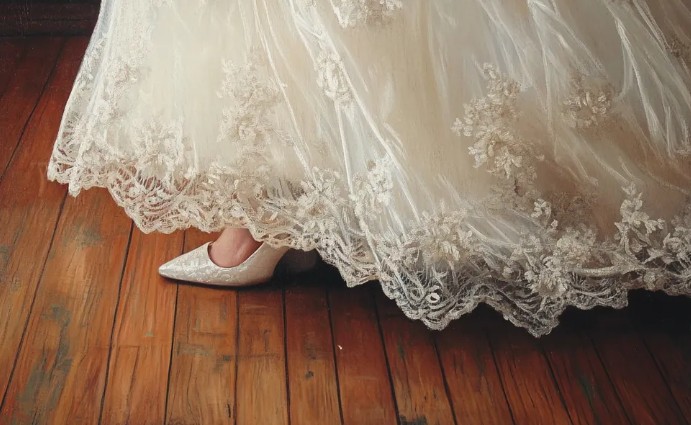
I walked down the aisle wearing a simple white dress I had found at a thrift store.
James waited at the front, looking both proud and terrified.
When we said our vows, his voice shook.
Mine did too.
But we meant every word.
Afterward, we went back to our apartment as husband and wife, collapsed into bed, and fell asleep almost instantly.
For the first time in my life, I felt completely certain about something.
I had a family.
Even if it was just the two of us.
The knock came the next morning.
It was firm and deliberate.
Not the careless knock of a neighbor. It was the kind of knock someone makes when they have a specific reason for being there.
James was still asleep.
I pulled on a hoodie and padded to the door.
When I opened it, a man stood on the landing. He looked to be in his late forties or early fifties. He wore a dark overcoat and held a leather folder.
His posture was calm and professional.
“Good morning,” he said politely. “Are you Meryl?”
Every instinct in my body immediately tensed.
“Yes?”
“My name is Victor Hale,” he said. “I’m an attorney. I’ve been trying to locate your husband for quite some time.”
My stomach dropped.
“What for?”
“There’s something he needs to know.”
Behind me, I heard the faint sound of wheels rolling across the floor.
James appeared in the hallway, rubbing sleep from his eyes.
Victor reached into his folder and pulled out a sealed envelope.
“I’m here because of a man named Harold Bennett,” he said.
James frowned.
“I’ve never heard that name before.”
Victor nodded gently.
“That’s understandable. But he knew you.”
We invited Victor inside.
He sat at our small kitchen table while James opened the envelope with slightly trembling hands.
Inside was a letter.
James began reading.
Years earlier, an elderly man named Harold Bennett had slipped on a curb outside a grocery store. He had fallen badly, scattering his groceries across the pavement.
People walked around him.
Some glanced down but kept moving.
Then a young boy in a wheelchair stopped beside him.
The boy carefully picked up the fallen groceries, helped the man sit upright, and waited with him until he felt steady enough to stand.
They talked briefly.
Harold never forgot that moment.
Later, he realized he had seen that same boy years earlier while doing repair work at a children’s home. It was the quiet boy who watched everything and rarely complained.
The boy is named James.
Harold had never married.
He had no children.
But he had spent years quietly building a life.
He decided that if he ever left it to anyone, it should be someone who understood what it meant to be overlooked. Someone who chose kindness anyway.
James’s voice shook as he reached the end of the letter.
Victor explained the rest.
Harold had recently passed away.
In his will, he had left a trust fund, his savings, and his house to James.
It was enough to give us a level of security we had never even imagined.
James stared at the envelope in disbelief.
“My entire life,” he said slowly, “when someone in a suit showed up, it meant something was being taken away.”
Victor smiled gently.
“Today,” he said, “I’m here to give you something.”
Several weeks later, we visited the house.
It was a modest single-story home on a quiet street.
There was a ramp already installed at the front entrance.
Inside, the rooms were warm and filled with sunlight. Photographs lined the walls, showing a life that had been simple but full.
A real home.
James rolled slowly through the living room, taking everything in.
“I don’t even know how to live somewhere that doesn’t feel temporary,” he admitted quietly.
I took his hand.
“We’ll figure it out,” I said.
Because for the first time in our lives, someone had chosen us.
Not because we were perfect.
Not because we were easy.
But because, even when the world overlooked us, we had chosen kindness anyway.
And this time, it stayed.