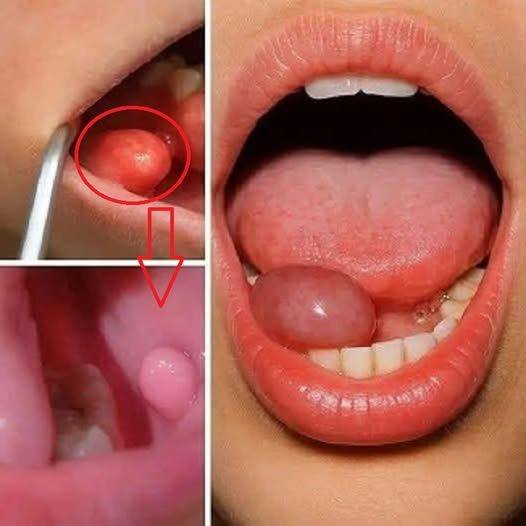
You’re running your tongue over the roof of your mouth, the inside of your cheek, or along your gumline, and you feel it: a small, firm bump. It wasn’t there yesterday. Your mind immediately races to a recent dental procedure, a new toothpaste, or that overly-hot slice of pizza you ate. But often, the appearance of these mysterious little nodules has a more specific, and surprisingly common, trigger that you might not connect to your mouth at all.
If you find small bumps in your mouth after doing this—after a period of significant stress, a bout of illness, or a sudden change in your routine—you’re likely not dealing with an infection or a tumor. You’re probably meeting a mucocele or an irritation fibroma. These are your mouth’s quiet, physical protest signs, its way of saying, “Hey, we’ve been through the wringer lately.”
The Bump That’s a Blister (But Not a Cold Sore): The Mucocele
The most common culprit for a sudden, painless, fluid-filled bump—often on the inner lip, floor of the mouth, or inside the cheek—is a mucocele. Think of it as a tiny, trapped puddle of saliva.
Here’s what happens: Your mouth is lined with hundreds of minor salivary glands, tiny ducts that secrete saliva to keep things moist. If you accidentally bite your cheek or lip (a classic stress-related habit), or if the duct gets blocked by a small plug of thickened saliva, the flow gets backed up. The saliva has nowhere to go, so it pools under the surface, forming a small, bluish-translucent or pearly cyst.
It might feel soft and movable. You might even pop it unintentionally, only to have it refill with clear, thick fluid. It’s your body’s attempt to wall off the spillage. The key trigger here isn’t always the bite itself, but the state you were in when you did it: tired, distracted, anxious, or grinding your teeth at night. Your mouth, in its stressed state, became a clumsier place.
The Bump That’s a Callus: The Irritation Fibroma
If the bump is more pink, solid as a pea, and feels firmly anchored, you’ve likely met an irritation fibroma. This is the mouth’s version of a callus. It’s not a cyst filled with fluid, but a benign overgrowth of scar-like fibrous tissue.
What causes it? Chronic, low-grade trauma. This is the “after doing this” part. After:
- A new dental appliance (a crown, bridge, or denture) that has a rough edge rubbing the same spot for weeks.
- A habit of chewing on your cheek, a pen cap, or a pipe stem.
- An accidentally jagged tooth or a broken filling that acts like a tiny knife, sawing at the soft tissue day after day.
- Vigorous, aggressive brushing with a hard-bristled toothbrush.
Your body’s response to this constant irritation is to lay down extra collagen—building a protective pad over the spot. It’s a well-intentioned but overzealous repair job.
The Emotional Connection: When Stress Erupts
It’s no coincidence that many people discover these bumps after a period of high stress, grief, or fatigue. Stress wears many disguises, and one of them is physical. It can lead to:
- Teeth grinding and clenching (bruxism): This not only damages teeth but also traumatizes the insides of your cheeks and gums.
- Nervous chewing: On lips, cheeks, or objects.
- A weakened immune response: Making minor irritations more likely to develop into noticeable bumps.
- Dry mouth: Stress and many medications can reduce saliva flow, making tissues more vulnerable to friction and altering saliva consistency, which can contribute to duct blockages.
Your Action Plan: From Observation to Resolution
Step 1: Don’t Panic, but Do Pay Attention.
Most mucoceles and fibromas are harmless. However, any new bump in your mouth that doesn’t go away on its own within two weeks warrants a professional look. The rule in dentistry and medicine is simple: a persistent lump must be identified.
Step 2: Become a Detective.
Ask yourself:
- Is it painful? Most mucoceles and fibromas are not. Pain suggests an ulcer, canker sore, or infection.
- What does it look/feel like? Soft and fluid-filled vs. hard and solid.
- Can I connect it to anything? A recent dental visit, a period of intense work stress, a new nervous habit?
Step 3: The Saltwater Rinse (Your First Line of Defense).
For any minor mouth irritation, a warm saltwater rinse (half a teaspoon of salt in a cup of warm water) several times a day is soothing, cleansing, and can reduce inflammation. It might help a mucocele drain and resolve.
Step 4: The Essential Appointment: See Your Dentist.
This is the most important step. Your dentist can diagnose the bump in seconds. They’ll check for sharp tooth edges or ill-fitting appliances. For a persistent mucocele or a bothersome fibroma, removal is a simple, in-office procedure done under local anesthesia. The tissue is usually sent for biopsy—not because they’re worried, but because it’s the standard of care to confirm a benign diagnosis. It’s a quick path to peace of mind.
Step 5: Address the Source.
If stress is the trigger, this bump is a reminder to manage it. If it’s a dental issue, get that rough edge smoothed. If it’s a habit, try to become conscious of it.
Finding a small bump in your mouth is your body’s way of making a footnote in the margin of your life’s story. It’s noting a period of friction, be it physical or emotional. By listening to that small, tangible signal, you can address a minor dental issue, reflect on your recent stress load, and take a simple step toward resolution. It’s a reminder that even the hidden, quiet places within us keep a record, and they sometimes ask for a little attention.