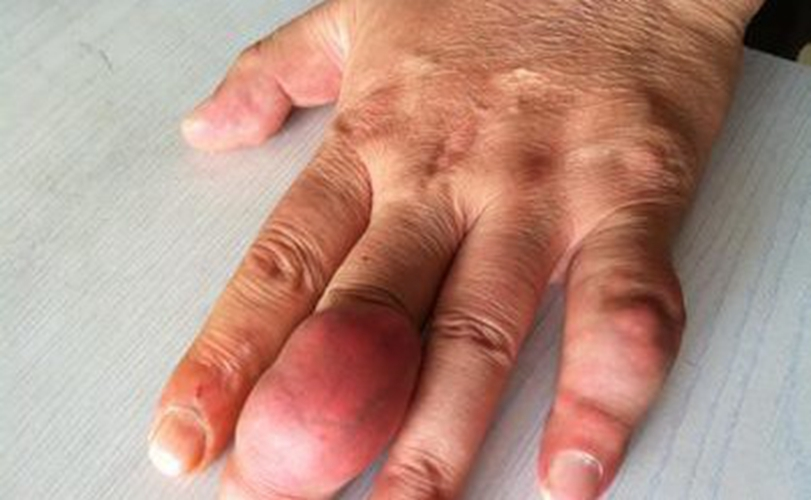
You notice it while trying to slip off a ring that’s usually loose, or when your fingertips feel oddly padded as you type. There’s a puffiness, a tightness in the skin at the very tips of your fingers. It might be subtle, but it’s persistent. While it’s easy to blame salt, heat, or a minor injury, this specific kind of swelling—especially when accompanied by other subtle changes—can be one of your body’s most elegant and serious bulletins. If your fingertips are swollen, it could indeed be a sign for your heart, pointing toward a condition where the heart is struggling to meet the body’s demands.
This isn’t the generalized ankle edema of congestive heart failure. This is more specific, often appearing in a constellation of symptoms that point to chronically low oxygen levels in your blood. The primary cardiac link is a condition known as cor pulmonale—right-sided heart failure caused by long-term high blood pressure in the arteries of your lungs (pulmonary hypertension).
The Oxygen-Starved Chain Reaction
Here’s the physiological domino effect:
- The Lung Problem: An underlying condition—most commonly Chronic Obstructive Pulmonary Disease (COPD), but also pulmonary fibrosis, or severe sleep apnea—damages the lungs. This makes it hard for oxygen to pass into your bloodstream.
- The Vascular Squeeze: The lack of oxygen causes the tiny arteries in your lungs to constrict and become stiff, raising the pressure in your pulmonary arteries (pulmonary hypertension).
- The Heart’s Strain: The right side of your heart, whose sole job is to pump blood to the lungs, now has to work against this high-pressure system. Like any muscle under constant strain, the right ventricle enlarges, thickens, and eventually weakens. This is cor pulmonale.
- The Back-Up of Blood: As the right heart fails, it can’t efficiently pump blood forward. Blood backs up into the venous system—the vessels that return blood to the heart.
- The Swelling in the Extremities: This backup of venous pressure causes fluid to leak into tissues. While it often shows in the ankles first, it can also manifest in the hands and fingertips, especially after prolonged dependency (like sleeping with your hands by your side).
The Telltale Companion: Clubbing
Swollen fingertips alone are one clue, but when paired with digital clubbing, the signal for heart and lung issues becomes much stronger. Clubbing is a gradual, structural change where:
- The nails soften and the nail beds become spongy.
- The angle where the nail meets the cuticle straightens or disappears.
- The very tips of the fingers enlarge and become rounded, resembling the end of a drumstick.
Clubbing is a classic sign of chronic hypoxia (low oxygen). The theory is that low oxygen triggers the release of growth factors that cause increased blood flow and tissue expansion at the fingertips. The combination of swollen, clubbed fingertips is a hallmark of serious, long-standing cardiopulmonary disease.
Other Cardiac and Systemic Clues
Fingertip swelling may also relate to other cardiovascular issues:
- Pericarditis: Inflammation of the heart’s lining can sometimes cause a paradoxical fluid retention pattern.
- Superior Vena Cava (SVC) Syndrome: A blockage of the major vein returning blood from the upper body to the heart can cause swelling in the face, neck, arms, and hands. This is often due to a tumor and is a medical emergency.
- Endocarditis: An infection of the heart valves can cause immune-mediated symptoms, including tiny, tender spots on the fingers (Osler’s nodes) that may be confused with swelling.
Your Action Plan: From Observation to Diagnosis
- Assess the Entire Picture. Are your swollen fingertips accompanied by:
- Shortness of breath, especially with activity?
- A chronic cough?
- Fatigue and unexplained weakness?
- A bluish tint to your lips or nail beds (cyanosis)?
- Swelling in your ankles and feet?
If yes, the urgency increases.
- Perform the “Diamond Window” Test for Clubbing. Place the nails of your two index fingers back-to-back. Normally, you should see a small, diamond-shaped space between the nail beds and the cuticles. In early clubbing, this space disappears.
- See Your Doctor Without Delay. This is not a “wait and see” symptom. Clearly describe your observations: “I have persistent swelling in my fingertips, and I’m concerned about my heart and lung function.”
- Prepare for a Cardiopulmonary Workup. Your doctor will likely:
- Listen carefully to your heart and lungs.
- Order a chest X-ray and CT scan to visualize your lungs.
- Request an echocardiogram (ultrasound of the heart) to assess the size and function of your right ventricle and estimate pulmonary artery pressure.
- Conduct pulmonary function tests to measure your lung capacity.
- Use pulse oximetry and possibly arterial blood gas tests to measure your blood oxygen levels.
Swollen fingertips are your body’s way of raising a quiet hand to signal a deep, systemic issue. They are a distant outpost reporting on the central crisis in your cardiopulmonary system. By understanding this connection, you transform a curious physical change into a potentially life-saving insight, prompting the investigations needed to protect and support your most vital organ. In the language of the body, sometimes the most important messages are whispered from the fingertips.