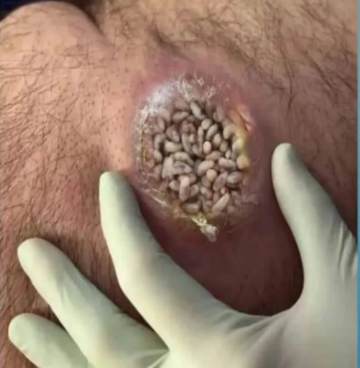
It starts as a subtle change. The skin, your lifelong protective barrier, begins to tell a story you didn’t author. It’s not just the expected wrinkles or benign age spots, but something more systemic, more insistent. Perhaps it’s a profound, waxy thinning that tears at the slightest bump, leaving non-healing ulcers—a condition called senile purpura or skin fragility syndrome. Maybe it’s a sudden, severe itch with no rash (pruritus), a maddening sensation that seems to come from deep within. It could be a dramatic yellowing (jaundice), a bronze-grey hue (hemochromatosis), or a startling darkening in creases and scars (Addison’s disease).
When skin breaks down in these specific, systemic ways, it is rarely just a “skin problem.” It is almost always the body’s final, visible bulletin—a desperate signal that a major internal system is in critical distress.
Think of your skin not as a mere covering, but as a projection screen for your body’s most vital organs. When the liver, kidneys, heart, or endocrine system begin to fail, they send their distress calls along the bloodstream, and the skin, with its vast network of vessels and nerves, displays the message.
The Liver’s Last Gasp: Yellow Flags and Spider Vessels
The liver is your body’s master chemist. When it fails, toxins and waste products it normally processes begin to flood the bloodstream.
- Jaundice: The classic yellowing of the skin and the whites of the eyes is from a buildup of bilirubin, a yellow pigment. It’s one of the liver’s most unmistakable cries for help.
- Palmar Erythema & Spider Angiomas: A reddening of the palms and tiny, spider-like blood vessels on the face and chest signal hormonal imbalances the scarred liver can no longer regulate.
- Intense, Generalized Itching: Bile salts deposited in the skin can cause itch so severe it leads to scarring, often with no visible rash.
The Kidney’s Cry: The Itch of Uremia and the Pallor of Anemia
Your kidneys are master filters. When they falter, waste products like urea accumulate—a condition called uremia.
- Uremic Pruritus: This is a deep, often unbearable itch that may be worse on the back, arms, and legs. It is notoriously difficult to treat until dialysis filters the blood.
- Pallor with a Yellow-Brown Cast: Anemia from failing kidneys combines with retained urochrome pigments to give the skin a characteristic, sallow hue.
- Calciphylaxis: A rare, catastrophic condition where calcium builds up in small blood vessels of the skin and fat, leading to agonizingly painful, violaceous patches that necrose into non-healing wounds. It is a dire prognostic sign.
The Heart’s Silent Plea: Blue Lips and Pitting Edema
When the heart cannot pump effectively, circulation slows and backs up.
- Cyanosis: A bluish or purplish tint to the lips, nail beds, and skin, especially in the extremities, signals dangerously low oxygen levels in the blood.
- Pitting Edema: Swelling in the legs, ankles, and feet where pressing a finger leaves a lasting dent. This is fluid that the struggling heart cannot keep in circulation.
- Clubbed Fingernails: A gradual softening of the nail bed and curving of the nails, often linked to chronic heart or lung disease causing long-term low oxygen.
The Endocrine System’s Disturbance: Bronze, Velvet, and Bruises
Your hormonal glands, when imbalanced, paint very specific pictures.
- Addison’s Disease (Adrenal Insufficiency): Causes a distinctive bronze or greyish hyperpigmentation, especially in sun-exposed areas, skin folds, scars, and creases.
- Acanthosis Nigricans: Velvety, dark, thickened patches in the neck, armpits, and groin. While sometimes genetic, its sudden appearance in adulthood is a strong marker for insulin resistance and often precedes a diagnosis of type 2 diabetes.
- Cushing’s Syndrome: Excess cortisol leads to profound skin fragility, easy bruising, purple stretch marks (striae), and a rounded, flushed face.
What To Do When Your Skin Sends This Signal
This level of skin change is a non-negotiable red flag. Your action plan must be swift and deliberate:
- Do Not Self-Treat: This is beyond the scope of lotions, creams, or over-the-counter remedies. You cannot moisturize away a failing organ.
- See Your Primary Care Physician Immediately: Frame your concern clearly: “My skin has dramatically changed in [this way], and I am concerned it reflects an internal problem.”
- Prepare for a Systemic Investigation: Your doctor will not just look at your skin. They will listen to your heart and lungs, feel your abdomen, and order a battery of tests:
- Comprehensive Metabolic Panel: Checks liver and kidney function, electrolytes, blood sugar.
- Complete Blood Count (CBC): Checks for anemia and infection.
- Thyroid and Hormone Panels.
- Imaging: Such as an ultrasound of the liver or an echocardiogram of the heart.
- Demand a Holistic View: A dermatologist will be a crucial specialist, but the lead investigator must be a physician who sees your whole system—an internist, hospitalist, or relevant specialist (nephrologist, hepatologist, endocrinologist).
When the skin breaks down in these profound ways, it has ceased to be just a barrier. It has become a manifest, a living document of internal crisis. To ignore it is to ignore a final, urgent memo from your body’s core. Heeding it, however frightening, is the first and most critical step toward diagnosis, management, and care. It is the body using its most visible organ to say what can no longer be whispered.