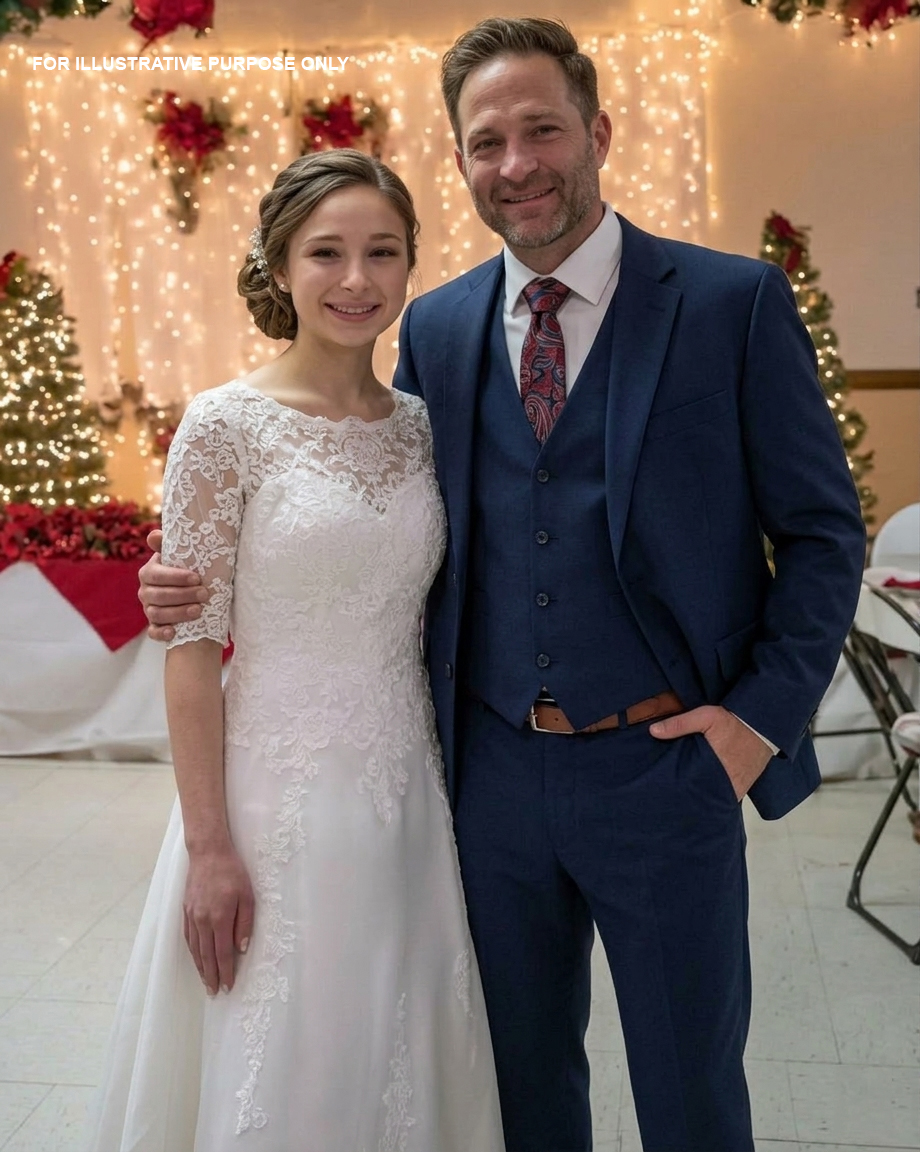
They say weddings are meant to unite families, to gather years of history into one hopeful moment where everything feels possible again.
Mine did the opposite.
It nearly shattered us.
For a long time, I believed the most painful part would be standing there, watching my daughter marry the man I had once called my husband. I was wrong.
The worst moment came later, when my son pulled me aside and quietly handed me the truth. It unraveled everything in a matter of minutes.
But none of it makes sense without the beginning.
I married my first husband, Jonathan, when I was twenty years old. It was not the kind of love story people write about. There were no grand gestures, no reckless passion, no uncertainty.
It was expected.
Our families had known each other for decades. Old money. Old traditions. An unspoken understanding that our lives would follow a certain path.
We grew up attending the same charity galas, the same summer events, and the same carefully curated holiday parties. Our parents vacationed together, sat on the same boards, and spoke in polished tones about legacy and reputation.
By the time we were old enough to understand what marriage meant, it had already been decided for us in everything but name.
When we finally got engaged, it felt less like a question and more like a formality.
The wedding was elegant, meticulously planned, and completely devoid of my input. My mother chose my dress. It was a beautiful designer piece that fit perfectly, but it never quite felt like mine.
Everyone said we looked perfect together.
And in a way, we did. We were polished, composed, and well-trained in the art of appearances.
For a while, we convinced ourselves it was enough.
That same year, I gave birth to our daughter, Avery. Two years later, our son, Liam, was born. From the outside, we looked like the ideal family.
We sent out professionally photographed holiday cards. We hosted dinner parties. We attended fundraisers. We maintained a home that looked like it belonged in a magazine.
But inside those walls, something quieter and far more damaging was happening.
We were slowly disappearing from each other.
There were no explosive arguments. No dramatic betrayals. Just silence. A heavy, suffocating silence that neither of us knew how to break.
We had been raised to avoid conflict, to preserve appearances at all costs. Disagreements felt dangerous, like cracks that could expose everything we were supposed to protect.
So we did not fight.
And because we did not fight, we did not fix anything either.
Years passed like that, parallel lives under the same roof. We were partners in responsibility, not in love. Eventually, after seventeen years, the weight of everything we never said became too much to carry.
Our divorce was quiet. Almost clinical.
No scandal. No shouting. Just signatures on paper and a mutual, unspoken relief that it was over.
Five years later, I met Elliot.
He was nothing like Jonathan. Where my first marriage had been structured and performative, Elliot felt real in a way I had never experienced before.
He was a high school literature teacher. The kind of man who quoted poetry in casual conversation and spent weekends restoring vintage cars in his garage.
He was divorced, raising three children, and refreshingly imperfect.
With him, I did not feel like I was playing a role. We talked, truly talked, about things that mattered. Regret. Fear. Aging. Parenting. The conversations I had been starving for without even realizing it.
I fell in love before I had time to question it.
We got married quickly. Too quickly, in hindsight.
And just as quietly as my first marriage had faded, this one unraveled.
There were no dramatic betrayals. No obvious breaking point. He simply withdrew.
Not emotionally at first, but in small, practical ways. Fewer conversations. Fewer plans. A gradual retreat from the future we had talked about building.
Six months later, it was over.
We told people it was mutual, and for a while, I believed that myself. I filed it away as another chapter. Brief, confusing, but finished.
I was wrong.
Two years later, Avery sat me down in my living room. I remember the way she looked, nervous, but glowing with something that felt dangerously close to certainty.
“Mom,” she said, “I am in love.”
I smiled because that is what mothers do.
Then she said his name.
“It is Elliot.”
For a moment, I thought I had misheard her.
“Elliot… who?” I asked, even though I already knew.
She held my gaze. “You know who.”
The room seemed to tilt.
She explained how it had started. How he had reached out. How they had reconnected. How easy it felt. She spoke about him with the same warmth I once had, the same conviction.
I could barely process the words.
He was sixteen years older than her. He had been my husband. And now he was hers.
I wanted to scream. To tell her it was wrong. To demand she stop.
But she did not give me the chance.
“If you do not accept this,” she said calmly, “I will walk away. Completely.”
It was not said in anger. That made it worse.
I looked at my daughter, my strong, determined, unyielding daughter, and realized I was about to lose her.
So I swallowed everything.
And I lied.
“I support you,” I said.
A year later, I stood at her wedding.
The venue was beautiful. Soft lighting. Eucalyptus garlands. Quiet music drifting through the air. Avery walked down the aisle, radiant in white, her face full of hope.
At the end of that aisle stood the man I had once promised forever.
I smiled for photos. I raised a glass during the toast. I played my part perfectly.
But inside, something felt deeply wrong.
Then Liam found me.
He had always been the steadier one. Thoughtful. Observant. The kind of person who noticed what others missed.
“Mom,” he said quietly, gripping my arm, “I need to show you something.”
There was something in his voice that made me follow without question.
He led me outside, away from the music and laughter, into the cool night air. The sounds of the reception faded behind us.
“What is it?” I asked.
He did not answer right away. Instead, he pulled out his phone, his expression tight.
“I hired someone,” he said finally. “A private investigator.”
I stared at him. “You did what?”
“I did not trust him,” Liam said. “I could not explain it at first. But something felt off. And when Avery started pulling away from us, it reminded me of what happened with you.”
My stomach dropped.
“There is more,” he continued. “A lot more.”
He showed me documents. Real ones. Court filings. Financial records.
Elliot had declared bankruptcy before meeting me. He had a history of unpaid debts, defaulted loans, and ongoing legal disputes with his ex-wife. Years of hidden financial issues that he had never disclosed to Avery or to me.
“He targets women with money,” Liam said quietly. “That is what this is.”
Everything suddenly made sense.
The hesitation over the prenup. The subtle shift after he signed it. The way he had slowly withdrawn when he realized I was not a financial opportunity.
And now, my daughter.
“She will not believe us,” I whispered.
Liam met my eyes. “Then we do not tell her in private.”
The plan was formed in silence.
Minutes later, we walked back into the reception.
The room glowed with celebration. Avery was laughing, completely unaware. Elliot sat beside her, composed and confident.
Liam stepped onto the stage.
He took the microphone, his voice calm but steady.
“I would like to say a few words,” he began.
The room quieted.
He smiled politely. “Marriage is built on trust. On honesty. So tonight, I think it is only fair we celebrate that properly.”
A few scattered chuckles followed.
Then his tone shifted.
“Elliot,” he said clearly, “would you like to tell everyone about your bankruptcy, or should I?”
The room went still.
Avery’s smile faltered.
Liam continued, laying out the truth piece by piece. Lawsuits. Debt. Deception. Every detail is supported by evidence.
Elliot tried to speak, but nothing came out.
Finally, Avery stood.
She looked at him, her voice shaking. “Is it true?”
He hesitated.
“It is complicated…”
“No,” she said, cutting him off. “It is not.”
She turned to me, her eyes filled with shock and heartbreak.
And then she walked away.
The wedding ended within the hour.
By morning, she had filed for an annulment.
In the weeks that followed, she moved back in with me. We talked, truly talked, for the first time in years. About everything. About love, mistakes, and patterns we did not realize we were repeating.
One night, she asked me, “Did you love him?”
I thought about it carefully.
“I loved who I thought he was,” I said. “But I think I was really just in love with how quiet things felt with him.”
She nodded slowly. “Yeah,” she said. “Me too.”
We laughed softly. The kind of laughter that comes after something breaks and begins to heal.
Time passed.
She started therapy. Took time for herself. Rebuilt her sense of identity piece by piece.
One evening, sitting across from me in the kitchen, she said, “Thank you for not letting him ruin my life.”
I reached for her hand.
“You saved yourself,” I said. “We just helped you see it.”
And for the first time in a long while, everything felt steady again.
Not perfect. Not polished.
But real.
And that, I had finally learned, was more than enough.