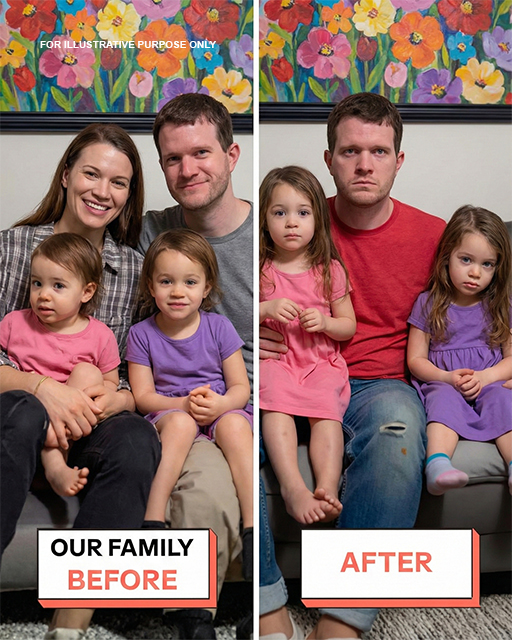
I was fifteen minutes late getting home that evening.
Fifteen minutes doesn’t sound like much, but in our house, it mattered. It was enough time for the girls to start asking for dinner, enough time for bedtime routines to wobble, and enough time for my wife, Clara, to send me a sharp text asking where I was.
But there were no messages. No missed calls. No irritation waiting on my phone.
That should have been my first warning.
The second came when I turned onto our street and noticed how neat everything looked. Too neat. There were no backpacks abandoned at the bottom of the porch steps. No chalk drawings smeared across the driveway. No jumble of scooters or jump ropes tangled in the grass.
The porch light was off.
Clara always turned it on at six.
I sat in the car for a moment longer than necessary, my hand still on the steering wheel, rainwater sliding down the windshield. My collar was damp. My head felt heavy from a long day of meetings and traffic, and the quiet pressed against me in a way that felt unfamiliar.
I checked my phone again. Still nothing.
When I opened the front door, the silence inside wasn’t peaceful.
It was wrong.
The television was off. The living room lights were dark. In the kitchen, a pot of macaroni sat on the stove, half stirred, noodles sticking together as if someone had walked away in the middle of a thought.
“Clara?” I called, dropping my keys onto the counter harder than I meant to. “Girls?”
No answer.
I stepped farther inside, already reaching for my phone to call her, when I noticed someone standing in the living room.
It was Tessa, our regular babysitter. She stood near the armchair, her phone clenched in both hands, her posture stiff and uncertain.
“Oh, Evan,” she said quickly. “I was just about to call you.”
My heart thudded. “Why? Where’s Clara?”
She glanced toward the couch.
That was when I saw them.
Our 6-year-old twins, Nora and Bea, were curled against each other like bookends, shoes still on, backpacks slumped on the floor beside them. They weren’t crying. They weren’t watching anything. They were just sitting there, silent in a way that didn’t belong to children.
“Clara called me around four,” Tessa said carefully. “She asked if I could come by. She said she needed to take care of something urgent. I thought it was errands, or an appointment, or—”
“Where is she now?” I interrupted.
Tessa swallowed. “She was already leaving when I arrived. She didn’t say where she was going.”
I moved past her and knelt in front of the girls.
“Hey, bug,” I said softly, brushing Nora’s hair back. “What’s going on?”
Nora looked at me with eyes too calm for her age. “Mommy said goodbye, Daddy.”
A cold shiver ran through me. “Goodbye, how?”
“Forever,” Bea said quietly, still staring at the floor.
“What do you mean, forever?” I asked, trying to keep my voice steady. “Did she say that word?”
Both girls nodded.
“She took her suitcases,” Nora added. “The big ones.”
“And she hugged us for a long time,” Bea whispered. “She was crying.”
“She said you’d explain it to us,” Nora said. “What does that mean?”
I looked up at Tessa. Her eyes were glossy, her mouth trembling.
“I didn’t know what to do,” she said. “They’ve been like this since I got here. I tried asking questions, but…”
I stood up, my pulse roaring in my ears, and walked down the hall to our bedroom.
I didn’t need to open every drawer to understand. Clara’s side of the closet was empty. Her favorite gray cardigan, the one she wore when she felt small or sick, was gone. Her makeup bag, her laptop, and the framed photo of the four of us at the beach last summer were gone too.
All gone.
On the kitchen counter, beside my coffee mug, sat a folded piece of paper.
My hands shook as I opened it.
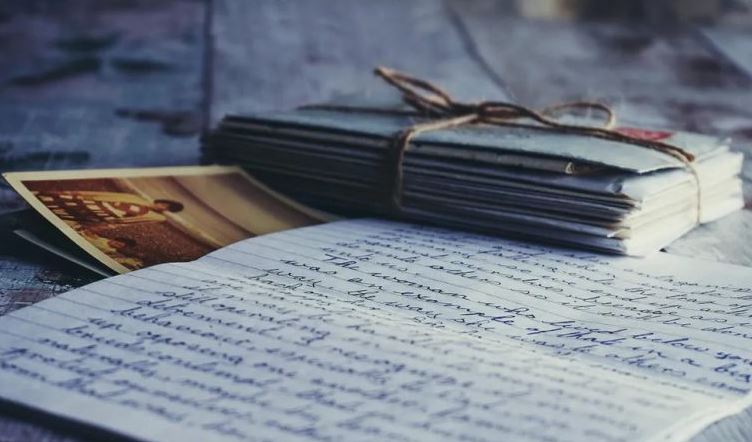
Evan,
I think you and the girls deserve a new beginning.
Please don’t blame yourself. Not for this.
If you want answers, you need to ask your mother.
All my love,
Clara
Ask your mother.
My chest tightened so hard it hurt to breathe.
I called the school. Voicemail. I called aftercare.
“Yes,” the woman on the line said slowly, “your wife confirmed the babysitter today. But your mother came by yesterday.”
“My mother?” I repeated.
“She asked about pickup permissions and requested copies of some records. We refused. It didn’t feel appropriate.”
I hung up and stared at the note again.
Ask your mother.
I didn’t let myself fall apart. Not yet.
I helped the girls into their jackets, thanked Tessa, and buckled them into the car. The drive to my mother Marilyn’s house passed in a blur of red lights and unanswered thoughts.
“Is Mommy mad?” Bea asked softly from the back seat.
“No,” I said, swallowing hard. “She’s just… figuring something out.”
“Does Grandma know where she went?” Nora asked.
I didn’t answer.
Marilyn answered the door, looking surprised to see us.
“Evan? What’s wrong?”
I held up the note. “What did you do?”
Inside, I found paperwork she hadn’t meant me to see. Custody contingencies. Forged signatures. A plan built on the assumption that my wife would break.
And suddenly, everything made sense.
That night, after I put the girls to bed, I read Clara’s hidden journal. Page after page of quiet suffering. Therapy sessions canceled. Parenting “corrections.” Control disguised as help.
The next day, I called a lawyer.
By evening, my mother had no legal access to my children.
That night, I called my wife.
“I’m so sorry,” I said into the phone. “I should have listened sooner.”
“I know,” she said softly. “But you’re listening now.”
Three days later, a package arrived. Crayons for the girls. Hair ties. A photo of Clara smiling at the ocean.
This time, the porch light stayed on.
And I waited.