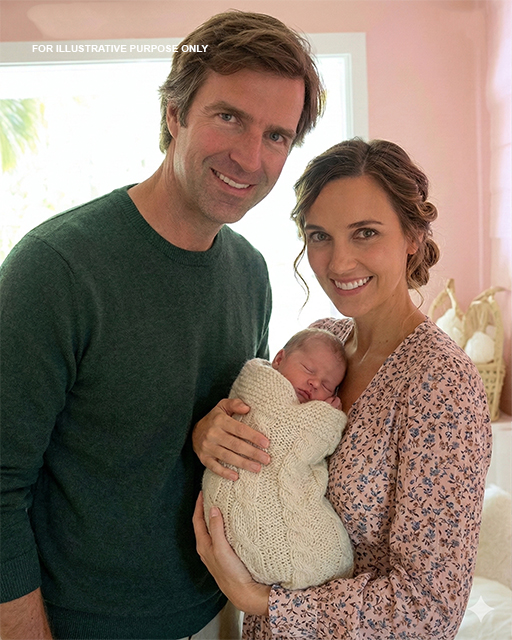
My name is Ivan, and I’m 36 years old.
For most of my adult life, I believed I understood what patience meant. I thought patience was waiting in long lines, saving money for something important, or working toward a promotion that might take years to achieve.
But the truth is, I didn’t understand patience at all until my wife and I tried to have a child.
My wife, Lynn, had dreamed of becoming a mother since the day I met her during our sophomore year of college.
I still remember the first time I noticed it. I had stopped by her dorm to borrow a textbook, and when she opened the door, I saw a baby-name book sitting beside her laptop.
I laughed and pointed at it.
“Planning something already?” I teased.
She didn’t even look embarrassed. Instead, she gave that small, determined smile she always used when she was trying to appear tougher than she really felt.
“I like to be prepared,” she said.
That was Lynn.
She planned everything. She organized her life the way some people organize spreadsheets.
Even back then, she had lists of baby names saved on her phone. She bookmarked nursery designs and parenting blogs. After we moved in together years later, she even kept a small plastic bin under our bed filled with baby clothes she had bought during random sales.
At first, it felt sweet and hopeful.
But as the years passed, that little bin began to feel heavier.
After we got married, we started trying for a baby almost immediately. At first, we assumed it would happen naturally. Everyone around us made it sound simple.
But months turned into years.
Our lives slowly began revolving around fertility treatments and medical appointments. Lynn tracked every detail of her body with scientific precision. She charted her temperature each morning before getting out of bed. She monitored hormone levels, ovulation cycles, and medication schedules with the dedication of someone studying for a medical exam.
We spent thousands of dollars we didn’t really have. Our savings shrank while our hope rose and fell like a tide.
There were moments when it seemed like we were finally getting close.
Twice, Lynn became pregnant.
Both times, we lost the baby early.
The first miscarriage left us stunned and silent. The second one broke something deeper.
I remember sitting beside her on the bathroom floor while she cried into my shoulder, whispering the same sentence over and over again.
“What if I’m not meant to be a mom?”
I didn’t know how to answer that.
Eventually, the doctors gave us the news we had feared but somehow still weren’t prepared to hear. They were gentle, professional, and careful with their words.
But the meaning was clear.
Our chances of having a biological child were extremely small.
The word infertility began appearing in every conversation.
For months afterward, we avoided talking about children entirely. The topic felt like a wound that had barely begun to heal.
But Lynn had carried the dream of motherhood for too long to let it disappear.
One night, while we were lying in bed, she finally spoke.
“Maybe we should think about adoption.”
Her voice was quiet and uncertain.
At first, she struggled with the idea. Lynn had always imagined being there from the very first moment of her child’s life.
“I don’t want to miss the beginning,” she whispered one night. “I want to be there when they’re born. I want to be the first person they see.”
That’s when we made a decision that would change everything.
If we adopted, we would adopt a newborn.
It took months of applications, background checks, interviews, and parenting classes. Adoption agencies don’t just hand babies to hopeful couples. They examine every corner of your life.
But eventually, we were approved.
And that’s when we met Alyssa.
She was eighteen years old.
Barely an adult, really.
The first time we saw her, she was sitting in a small office beside her social worker. She looked tiny in the chair, her hands folded nervously in her lap. Her posture was stiff, as if someone had told her that sitting straight would make her seem more mature.
Lynn immediately reached out and took her hand.
“Are you okay?” she asked softly.
Alyssa nodded, though her eyes revealed how overwhelmed she was.
She didn’t cry while telling us her story.
Her home life was chaotic. Her mother had made it clear that she wouldn’t help raise the baby. Alyssa felt completely unprepared to become a parent.
“I just want my baby to have a good life,” she said. “A stable one.”
Lynn squeezed her hand.
“We can give that,” she said gently.
A week later, the paperwork was signed.
When the day finally arrived, we drove to the hospital in a blur of disbelief and anticipation. My hands were shaking so badly on the steering wheel that Lynn had to remind me to breathe.

The baby was born just before dawn.
She was small, pink, and impossibly perfect.
We named her Molly.
She had a tuft of dark hair and a cry loud enough to echo through the entire hospital wing.
Lynn held her like she had been waiting her whole life for that moment.
Because she had.
When we brought Molly home, our quiet apartment transformed overnight.
Bottles, blankets, burp cloths, and baby wipes appeared everywhere. The living room looked like a miniature supply warehouse.
But we didn’t care.
The first four weeks were exhausting, chaotic, and beautiful.
We lived in a permanent fog of sleepless nights and lukewarm coffee. Lynn barely slept at all. She often stayed in the nursery’s old armchair, resting one hand on Molly’s bassinet as if sheer determination could protect her.
Despite the exhaustion, she smiled constantly.
“I still can’t believe she’s ours,” Lynn whispered one night while rocking the baby in the dark.
“We waited long enough,” I told her.
And I truly believed the hardest part of our journey was behind us.
I was wrong.
One evening, about four weeks after bringing Molly home, I returned from work and immediately felt that something was wrong.
The apartment was too quiet.
I set my keys on the counter and called out Lynn’s name.
No answer.
I walked into the living room and found her sitting on the couch, staring blankly at the television. The screen was on, but she clearly wasn’t watching it.
Her eyes were red and swollen.
My stomach tightened.
“Lynn?” I said. “What’s wrong? Where’s Molly?”
She slowly turned her head toward me.
“We’re not parents anymore,” she said.
The words didn’t make sense at first.
“What are you talking about?”
She gestured weakly toward the kitchen table.
“Check my email. The agency sent something.”
My hands were already sweating as I opened her laptop.
The message was short and painfully formal.
According to state law, a birth mother had a thirty-day window to revoke her consent after an adoption.
And earlier that afternoon, Alyssa had contacted the agency.
She wanted her baby back.
I read the email again.
Then again.
My legs felt weak as I walked back to the living room.
Lynn looked up at me, already knowing the answer.
“Where’s Molly?” I asked quietly.
“Upstairs,” Lynn whispered. “She’s sleeping.”
She held the baby monitor in her hands like it was the last fragile connection we had left.
“They can’t just take her,” she said through tears. “She knows us. She knows my voice.”
I wrapped my arms around her.
“We’ll figure this out,” I said. “Whatever it takes.”
That’s when someone knocked on the door.
Three sharp, deliberate knocks.
Lynn froze.
I walked to the door slowly, already fearing what I might find.
When I opened it, my heart dropped.
Alyssa stood on the porch.
She looked different from the nervous girl we had met weeks earlier. Her posture was straighter, and her expression was more confident.
“Can I come in?” she asked.
Lynn appeared behind me, her face pale.
After a long moment, she nodded.
Alyssa stepped inside and sat on the edge of the couch.
“I’m not here to take the baby tonight,” she said. “I just want to talk.”
Lynn’s voice trembled.
“Why are you doing this?”
Alyssa hesitated, then spoke plainly.
“I need money.”
The room fell silent.
“I’m not ready to be a mom,” she continued. “But I know I still have rights. I could take her back.”
She paused.
“Unless you’re willing to pay me to walk away.”
Lynn gasped as if the air had been knocked from her lungs.
“You’re talking about our daughter,” she said. “Not an object!”
Alyssa shrugged.
“I gave birth to her. I get to decide.”
Something inside me shifted in that moment. The panic disappeared, replaced by a strange, cold clarity.
I sat down across from her.
“How much?” I asked calmly.
She blinked, clearly surprised.
“Fifteen thousand dollars,” she said. “Cash. No transfers. No checks.”
Lynn let out a broken sob and ran upstairs toward the nursery.
Meanwhile, I kept my voice steady.
“And if we don’t?”
“I revoke the adoption and take her back.”
What Alyssa didn’t realize was that our home security system recorded both video and audio.
The entire conversation was being captured.
I also quietly started recording on my phone.
“So just to be clear,” I said, leaning forward, “you’re asking for money in exchange for giving up your parental rights.”
“Yes,” she replied without hesitation.
“Thank you for being honest,” I said.
Then I walked her to the door.
The next morning, we contacted a lawyer named Victor Hale, who specialized in adoption disputes.
After reviewing the recordings, he told us something that gave us our first real hope since the nightmare began.
“This changes everything,” he said.
The legal battle that followed lasted months.
Court hearings, testimonies, and endless paperwork filled our lives. Alyssa changed her story more than once. At one point, she claimed we had offered her money first.
But the recordings told a very different story.
Lynn attended every hearing with quiet strength. She never insulted Alyssa or lost control of her emotions.
She focused only on one thing: protecting Molly.
Finally, the day of the final ruling arrived.
The courtroom was silent as the judge read the decision.
“This court finds that the birth mother attempted to extort money in exchange for relinquishing parental rights. A child is not property. Therefore, her parental rights are permanently terminated.”
Lynn burst into tears.
But this time, there were tears of relief.
When we returned home that evening, she held Molly against her chest for hours, kissing the top of her head again and again.
Four weeks after becoming parents, we had nearly lost our daughter.
But we fought for her.
And in the end, love proved stronger than fear.
A few weeks later, I was holding Molly while Lynn folded laundry nearby.
She looked at me thoughtfully.
“I still think about that knock on the door,” she admitted. “Sometimes it still scares me.”
I walked over and kissed her forehead.
“That knock didn’t end our story,” I said. “It reminded us who we are.”
She smiled softly.
“We’re her parents.”
“Yes,” I said.
“And no one is taking that away again.”