The sharp crack of a slap echoed through the vast marble hall of the estate outside Guadalajara, cutting through the afternoon light like a gunshot.
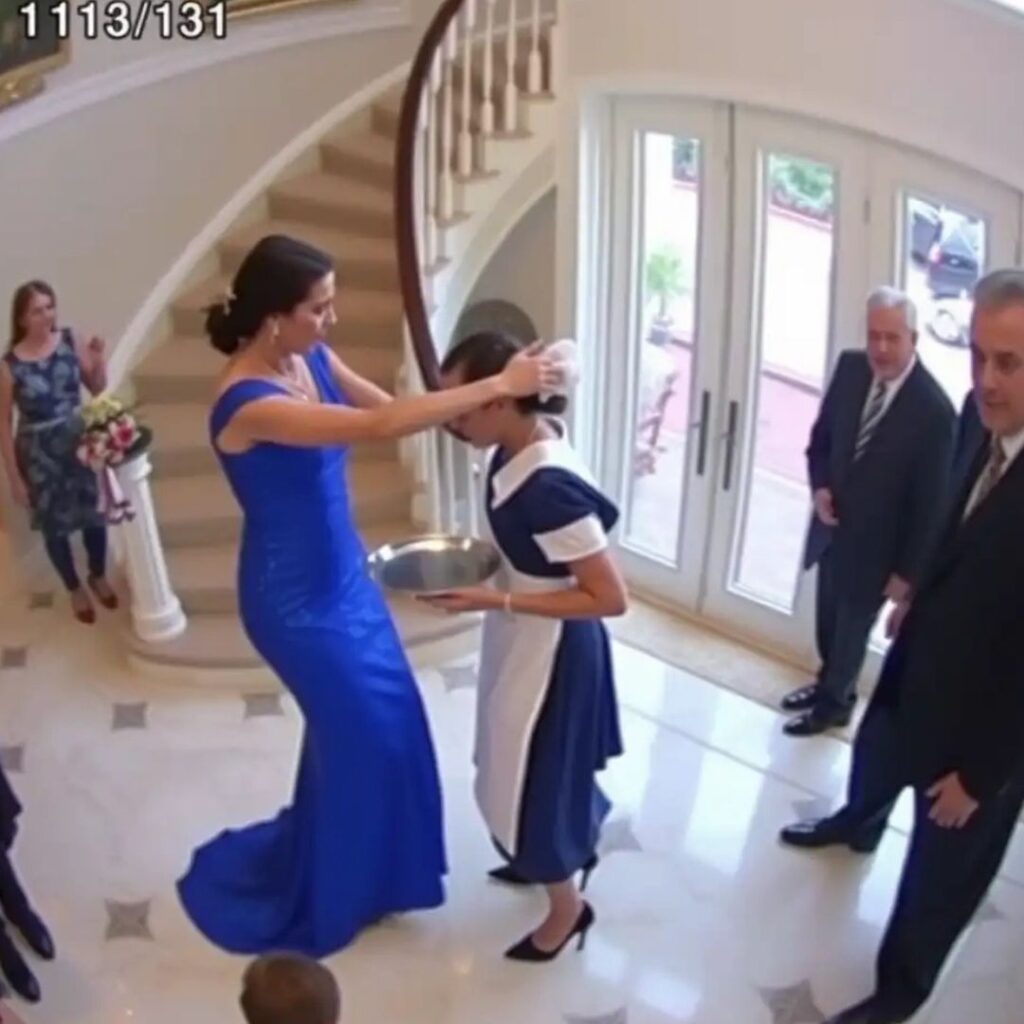
Olivia Hernández, the new wife of Mexican magnate Rafael Montoya, stood rigid in a dazzling blue dress, sunlight catching on silk as rage burned openly in her eyes.
Her hand still hovered in the air, fingers trembling, while the young housemaid in front of her pressed a palm to her cheek, stunned into silence.
No one intervened.
No one ever did.
The Montoya estate was infamous among domestic workers, whispered about in agencies and shared in hushed warnings, because no maid ever lasted more than a few weeks.
Some quit after days, others vanished overnight, and a few left in tears, swearing never to work in a private house again.
The reason was always the same: Olivia Hernández.
Since marrying Rafael Montoya, a billionaire industrialist with business interests across Latin America, Olivia had transformed the mansion into a battlefield.
She demanded perfection from staff while inventing failures, correcting posture, tone, breathing, anything that gave her an excuse to release her anger.
Rafael was rarely home.
When he was, Olivia was charming, elegant, the picture of a refined philanthropist who smiled for charity galas and spoke about women’s empowerment.
Behind closed doors, the staff learned a different version of her, one fueled by insecurity, control, and the knowledge that no one would challenge her.
The previous maids had all tried the same strategy: endure, keep their heads down, and wait for Rafael to notice.
He never did.
Or worse, he noticed and chose silence, because silence was easier than conflict, and his empire thrived on avoiding inconvenience.
Then came Marisol Vega.
Marisol was not young, not timid, and not desperate in the way Olivia expected from her staff.
She was forty-eight, a widow, and had raised two sons on her own, working in hospitals, hotels, and homes where dignity was scarce.
She arrived with no illusions about wealth or kindness, only a clear understanding of how power behaves when unchecked.
On her first day, Olivia tested her immediately, criticizing the way she folded towels, the speed of her steps, the way she lowered her eyes.
Marisol listened quietly, nodded once, and continued working without apology or fear.
That unsettled Olivia more than defiance ever could.
Over the following weeks, Olivia escalated.
She threw plates, accused Marisol of theft, ordered her to redo entire rooms minutes after they were finished, and once deliberately spilled wine just to watch her clean it.
Marisol never raised her voice.
She never cried.
But she did something none of the others had done: she paid attention.
She noticed the security cameras that were always “offline” near the service corridors.
She noticed how Rafael’s schedule was managed exclusively by Olivia’s assistant.
She noticed how the staff turnover was hidden behind non-disclosure agreements and generous severance payments meant to buy silence.
And most importantly, she noticed how afraid everyone else was.
One afternoon, Olivia struck another maid in the kitchen for dropping a glass, and Marisol stepped forward before thinking.
“That’s enough,” she said calmly.
The room froze.
Olivia laughed, sharp and disbelieving, and asked Marisol if she had forgotten her place.
Marisol met her gaze and replied, “No, señora. I remember it very well.”
That night, Marisol did not sleep.
Instead, she began documenting everything, recording dates, bruises, broken objects, verbal abuse, and the names of witnesses too afraid to speak.
She contacted former maids quietly, finding them through agencies and word of mouth, listening as stories poured out that matched her own experiences exactly.
Patterns emerged.
The same insults.
The same threats.
The same claim from Olivia: “My husband will believe me.”
Marisol also discovered something else.
Rafael Montoya’s companies were under increasing scrutiny from international partners who demanded strict ethical compliance, including labor standards and workplace conduct.
A scandal inside his own home would not stay private for long.
When Olivia slapped Marisol two weeks later, hard enough to draw blood, Marisol did not react.
She simply said, “Thank you,” and walked away.
The next morning, Rafael Montoya arrived home unexpectedly to find lawyers, labor inspectors, and a representative from his largest European investor waiting in his living room.
Marisol stood beside them, composed, holding a folder thick with evidence and testimonies.
Olivia’s face drained of color.
For the first time, her voice failed her.
Rafael tried to speak, but the inspector calmly explained that domestic workers were still workers, and abuse did not become invisible just because it happened behind gates.
The investor representative added that their partnership required immediate action, transparency, and consequences.
Olivia screamed betrayal.
She accused Marisol of manipulation, of greed, of plotting, but the room no longer belonged to her.
Former maids arrived one by one, some trembling, some furious, all telling the same truth Olivia thought she had buried.
Rafael listened as his carefully curated world collapsed sentence by sentence.
He realized too late that his silence had been permission.
Olivia was removed from the estate that same day.
Legal proceedings followed, quiet but relentless, and the settlement included public acknowledgment of wrongdoing and mandatory reforms.
Marisol did not stay.
She declined offers of promotion, compensation beyond what she was owed, and interviews that wanted to paint her as a hero.
“I didn’t do anything impossible,” she said to one former maid before leaving.
“I just refused to believe she was untouchable.”
Months later, word spread through agencies that the Montoya house was safe again, that staff were protected, that respect was no longer optional.
And among the women who heard the story, one lesson lingered stronger than fear:
Power only survives when everyone agrees to stay silent, and sometimes, one woman choosing not to endure is enough to change everything.